Tampilkan postingan dengan label running. Tampilkan semua postingan
Tampilkan postingan dengan label running. Tampilkan semua postingan
Selasa, 07 Februari 2012
This is ridiculous...
I ran only 30 minutes today and, after getting showered and putting on my work shirt, I noticed spots of blood appearing... Runner's Nipple! After only 30 minutes!! Really, I thought I'd have grown out of this kind of thing by now...

Kamis, 26 Januari 2012
The ageing (tri)athelete
They say that a man has the face he deserves when he is 40 years old. I suppose the same can be said about his body.
I'm coming up to the big 4-0 in the next few months so I guess this topic has been a bit on my mind lately, if only on a subconscious level. So, it wouldn't be a coincidence, then, that I have recently read several articles on the subject - one even in the Economist this week. According to this article, there has been a recent flurry of activity on the subject of autophagy - which comes from the Greek for "self-eating". Rather than some kind of perverted sexual act, this refers to a process the body uses to break down and recycle damaged cells. Evidence from tests performed on the usual suspects - rats - seems to indicate that this process, triggered by regular exercise, helps combat the effects of aging.
I also stumbled upon this article from another blog, where I found this striking photo:
 It is originally from an article by 2.52 Marathoner and physiotherapist, Laura McIntyre.
Then last night, as I was drifting off to sleep, I dipped into the Runners's Lore by Tim Noakes and started reading a section on running ultramarathons as you age. By his own admission, it was strange that the main thrust of the article (in a book about running) was actually to encourage older runners to mix up running with increasing amounts of non-weight bearing sports such as swimming and cycling. Anecdotally, the author reported that he had noticed as the years wore on, that the aches and pains in his muscles would become a more or less permanent accompaniment of his running mileage. He said that research was (at the time of writing) currently being undertaken in Cape Town University as to whether muscles had a limited number of "repair cycles". This would imply that a runner in his 40's who had been running since he or she was 20 might suffer a similar slow down to a 60 year old runner who took up running at the age of 40. Selfishly, I hope he is right. It's certainly food for thought and perhaps a good reason to move towards triathlon as we get older. However, an important point he made was that we should not base our expectations on those "outliers" who run sub-3 hour Marathons well into their 60's, or complete Ironman's in their 80's. While part of what makes them an outlier might be due to the small population of similarly aged athletes, some of it will be due to extraordinary genetics. After all, we wouldn't expect to be able to run as fast as Haile even if we did the same amount of training... Still, I just hope I can find a way to keep being active until the end credits roll...
I'm coming up to the big 4-0 in the next few months so I guess this topic has been a bit on my mind lately, if only on a subconscious level. So, it wouldn't be a coincidence, then, that I have recently read several articles on the subject - one even in the Economist this week. According to this article, there has been a recent flurry of activity on the subject of autophagy - which comes from the Greek for "self-eating". Rather than some kind of perverted sexual act, this refers to a process the body uses to break down and recycle damaged cells. Evidence from tests performed on the usual suspects - rats - seems to indicate that this process, triggered by regular exercise, helps combat the effects of aging.
I also stumbled upon this article from another blog, where I found this striking photo:
Then last night, as I was drifting off to sleep, I dipped into the Runners's Lore by Tim Noakes and started reading a section on running ultramarathons as you age. By his own admission, it was strange that the main thrust of the article (in a book about running) was actually to encourage older runners to mix up running with increasing amounts of non-weight bearing sports such as swimming and cycling. Anecdotally, the author reported that he had noticed as the years wore on, that the aches and pains in his muscles would become a more or less permanent accompaniment of his running mileage. He said that research was (at the time of writing) currently being undertaken in Cape Town University as to whether muscles had a limited number of "repair cycles". This would imply that a runner in his 40's who had been running since he or she was 20 might suffer a similar slow down to a 60 year old runner who took up running at the age of 40. Selfishly, I hope he is right. It's certainly food for thought and perhaps a good reason to move towards triathlon as we get older. However, an important point he made was that we should not base our expectations on those "outliers" who run sub-3 hour Marathons well into their 60's, or complete Ironman's in their 80's. While part of what makes them an outlier might be due to the small population of similarly aged athletes, some of it will be due to extraordinary genetics. After all, we wouldn't expect to be able to run as fast as Haile even if we did the same amount of training... Still, I just hope I can find a way to keep being active until the end credits roll...
Minggu, 15 Januari 2012
Treadmill calibration

I discovered that there is a way to calibrate the belt speed. I was surprised to discover that all treadmills seem to use the same trick to activate the calibration mode: while holding down the "stop" and "increase speed" buttons, you insert the key and then release the two buttons. When you ramp up the motor to 85% of it's maximum power, the treadmill should reach maximum speed - in my case it was saying 17.5 kph instead of the reported maximum of 18 kph. My treadmill appears to have an automatic calibration mode which you start by pressing the "increase speed" and "decrease speed" buttons as you insert the key. In general, all the speeds were coming out slightly lower than they should have been but I expect that the automatic calibration is on the conservative side. Imagine that somebody were to injure themselves on a treadmill and then sue the manufacturer because it was running at 9.3 kph instead of the 9 kph they had programmed!
I tried using my Garmin foot pod, which is a little device with in built accelerometers that you attach to your shoe. Firstly I calibrated it to GPS signals by running outside and then I ran (supposedly) at 16 kph on the treadmill indoors. The foot pod seems so inaccurate that I wasn't able to come to any conclusion. For example, just by exaggerating the kick under my butt, I was able to appear to run much faster even though I had not changed the speed of te belt.
It seems to me that the best approach is to do the obvious. I chalked a mark on the belt, measured the length of the belt and counted how many times the mark went past in a minute. For this I used a BPM (Beats Per Minute) calculator on my iPhone - sometimes my past life as a deejay comes in handy. By my calculations, the treadmill is about 3.5% slow. Even so, the run I did last night was at an average speed of 14.9 kph - fast enough to run 10k in a tad over 40 minutes and then another half again. Not bad for a less than medium intensity run.
Rabu, 11 Januari 2012
Range of Motion
 |
| Uh oh |
The picture is of my Mac charger after my father-in-law's dog chewed through it at the weekend. Incredibly, I was able to find a replacement charger the next day in a shop on the way home from work. Incredible, because I both work and live "in the sticks". However, yesterday, as I was getting ready to do my series of 20 minutes hard running on the treadmill, the new charger started acting up. Rob needs the charger to charge my Mac, to play the film that Rob needs, to be able to suffer the run. The days when I leave my workout until the evening I tend to get a little nervous; for me, the best time is at lunch time when I am neither straight out of bed nor am I spending time when I could otherwise be with my family. I got especially nervous that I wouldn't be able to do my workout unless I could watch some kind of slasher-flick to distract me as I have been doing lately. In the end, not only did I manage to solve the problem but I had the best workout I have perhaps ever had.
I need to qualify that. The thing is, either I was running much faster for less effort than usual, or the treadmill was broken. I'm really not sure which. It felt as though I was running fast but the difference was (and here the title of the post will become clear) that I was kicking my legs up much higher under my butt. The back of my hamstrings started to get warm from the contact with my lower leg and it felt like the leg was rebounding of my bum. I ran the first set of twenty minutes at 16 kph and didn't even go over 160 bpm (for comparison, my recommended heart rate for running a Marathon is 163 bpm). The next set I did at 16.5 kph and the last 20 I did half at the same speed before dropping down to 16 kph for the end (my heart rate was now where it should be, just below the anaerobic threshold at 178 bpm).
By kicking my leg up higher (larger range of motion) my cadence was lower than it would usually be running at that speed. I may try to measure it to see whether it was lower than my cadence at my cruising speed of 13.5 kph. All the schools of efficient running advocate a high cadence of around 180 footsteps per minute - some even suggest you run with a metronome, others simply say that the high cadence is the result of doing everything else right. The Pose Method, which I followed in order to run more efficiently, talks a lot about the range of motion and essentially says that the drills help us find an optimal range of motion. Too high a range of motion and you are wastefully moving your legs; too low and the cadence becomes too high and the extra steps taken are similarly wasteful. This is also related to the stride length and how much we bounce up and down in each stride. Much has been made of the importance of not bouncing up and down too much - this is needless work done against gravity - but it is also clear that this up and down movement muust be optimized not necessarily minimized. A study that was cited in the "Iron War" book that I read over the weekend came to the conclusion that the "bounce" wasn't a determining factor in the efficiency of the runners it tested but, what was critical, was the acceleration / deceleration of each footstep. In other words, the braking effect which is especially exacerbated by heel striking but is also determined by your skill and elasticity as a runner. So maybe I was bounding more by lifting my leg higher, maybe I was bouncing up and down a little more as a result, but perhaps I was running more efficiently. After all, I have long, powerful (and heavy) legs.
If I get a chance I may try a little scientific experiment of one on myself in order to determine my optimal cadence (the measurable consequence of running with one range of motion or another). The problem, of course, is that many other factors influence the heart rate, in particular, how tired you are. Anyway, something to think about...
Rabu, 30 November 2011
Run & Race
I just picked up this month's Run & Race mainly for the narcissistic reason that they have included a photo of me from the training camp I went on in Morocco recently:

There were a couple of genuinely interesting articles on running shoes. Now, when people ask me for recommendations for running shoes, I often start off by saying that there are basically two paths that you can take. The easy one is to have your gait analyzed and be recommended shoes and possibly even orthotics based on whether you are a pronator or supinator. The harder path, and the one that very few people I know have chosen, is to retrain your gait and go for minimalist or "barefoot" running shoes, relying on your own natural cushioning from the arch of your foot, the pronation of the foot and the elasticity of the Achilles tendon. These two paths are pretty much orthogonal to each other so you can't really try one of them out before deciding which to follow. If you choose "minimal" then you have to make a big commitment to reconditioning your muscles, tendons, ligaments and bones to a completely different set of stresses and strains. This means building running up again from scratch, something that few people are prepared to do and that others do not have the patience to stick to. And there is nothing wrong with that. You can perfectly well go down the path of orthotics and motion control shoes with lots of cushioning but you should be aware that you are creating a dependency, rather like someone who needs to take sleeping pills to sleep at night.
I mention all this because there were two articles back-to-back that appeared to be saying completely the opposite of each other. On closer reading, they both made a lot of sense only that one was for those traveling along the path of motion control shoes and the other was for those traveling along the path of minimalist shoes.
The first article was actually written by the guy who recommended I should run with orthotics and who had some custom ones made for me to run in. With these orthotics I could then choose "neutral" running shoes because the orthotics would correct my tendency to overpronate. With hindsight I can see that this was just a patch to correct the fact that I was running with poor technique, with shoes that encouraged me to heel strike (and therefore overpronate) and with weakness in the supporting muscles of my feet and lower legs. On the other hand, just like taking a pill, it worked. The pain I was getting in my ITB (isquiotibial band) immediately subsided and it was only months later that knee pain forced me to choose the other path. Apart from the ostentatious title "The truth about running shoes", I can appreciate that what he says applies to the majority of runners who are not prepared to go down the same path as I did.
I was excited to see an article in a running magazine about minimalist shoes that was not an attempt to pass off lightweight racing flats from major brands off as such (unlike the review sections in Runner's World, for example). It's a shame that it has taken two years since I first came across them for it to appear - one would expect the running magazines to be ahead of the curve - but it doesn't take to much imagination to understand why this might be. I wasn't too surprised to see that the author of the article was actually Jonathan, my trainer. In the first paragraph he mentions the impact that the book "Born to Run" (only recently translated into Spanish) has had. In fact, I was the one that gave him that book a couple of years ago! As I would expect from Jonathan, it's a very well balanced article that avoids the evangelical side typical of those of us who have chosen the path of minimalist shoes and instead emphasizes the point that the adaptation to the different style of running that this entails can take a long time. I remember him saying to me in Berlin where he was running the Marathon and I was not (due to my foot being in an airboot for precisely not allowing time for adaptation) something that he also closed the article with, that "perhaps 37 years of wearing shoes can undo millions of years of evolution". In other words, it may be that our feet are amazing works of engineering that have evolved to allow us to run for hundreds of kilometers unshod but that doesn't mean that we can ignore the adaptations our bodies have made in the short space of our lifetime to wearing shoes.

There were a couple of genuinely interesting articles on running shoes. Now, when people ask me for recommendations for running shoes, I often start off by saying that there are basically two paths that you can take. The easy one is to have your gait analyzed and be recommended shoes and possibly even orthotics based on whether you are a pronator or supinator. The harder path, and the one that very few people I know have chosen, is to retrain your gait and go for minimalist or "barefoot" running shoes, relying on your own natural cushioning from the arch of your foot, the pronation of the foot and the elasticity of the Achilles tendon. These two paths are pretty much orthogonal to each other so you can't really try one of them out before deciding which to follow. If you choose "minimal" then you have to make a big commitment to reconditioning your muscles, tendons, ligaments and bones to a completely different set of stresses and strains. This means building running up again from scratch, something that few people are prepared to do and that others do not have the patience to stick to. And there is nothing wrong with that. You can perfectly well go down the path of orthotics and motion control shoes with lots of cushioning but you should be aware that you are creating a dependency, rather like someone who needs to take sleeping pills to sleep at night.
I mention all this because there were two articles back-to-back that appeared to be saying completely the opposite of each other. On closer reading, they both made a lot of sense only that one was for those traveling along the path of motion control shoes and the other was for those traveling along the path of minimalist shoes.
 |
| "The truth about running shoes" |
 |
| "Minimalist shoes - are we ready?" |
Kamis, 17 November 2011
Fantastic
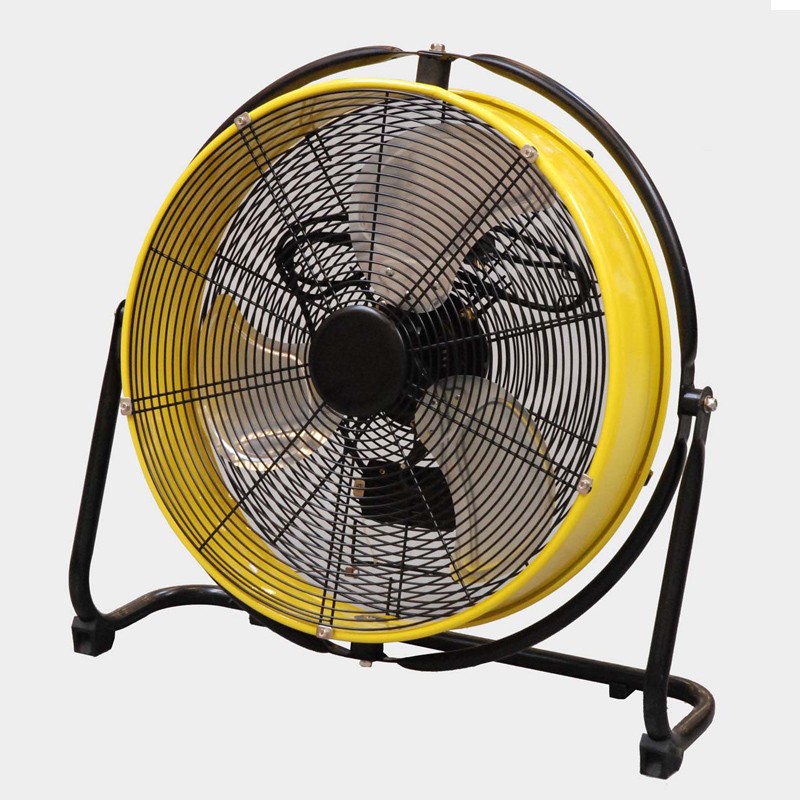
Firstly, we need to know what surface area we present to the wind. Using a formula I nicked off the internet - 0.0204*height in meters^0.725*weight in kilos^0.425 - and dividing by two, I came up with a surface area of 1.07 square meters. (Obviously this is a good example of false accuracy - the real number will be less because the skin between your toes has no bearing on the amount of air you displace while running, for example.) So that means that 4,080 cubic meters per hour is equivalent to running in still air at 4,080 / 1.07 / 1,000 = 3.8 kph. Is that all?? There is another model which is much more powerful and generates a "breeze" equivalent to running at about 16 kph but I think this would be going too far. Just imagine it - if you were to turn this thing on, you would go from running upright on the treadmill, to having to lean into the wind as you do when you run outside (see my previous post on this topic). And that is supposing you can set things up in such a way that the air current hits your body uniformly. According to Jack Daniels' formula, running outside is equivalent to running on a treadmill with a gradient of 1% because there is no need to overcome air resistance. In fact I have always set the gradient to 1% on the treadmill for this reason but with my new mega-fan maybe I will have to take air resistance into account!
Here it is installed...

Kamis, 03 November 2011
Nice article from NY Times on running
From the same guy who wrote "Born to Run".
http://www.nytimes.com/2011/11/06/magazine/running-christopher-mcdougall.html
http://www.nytimes.com/2011/11/06/magazine/running-christopher-mcdougall.html
Jumat, 14 Oktober 2011
Keep those knees up boy
I've been thinking about what Jonathan told me about my running technique during the training camp in Morocco. The best thing to think while running is about running. Jonathan pointed out that there is a small pause in which my foot shoots out as if to kick a football just before I land slightly ahead of my center of gravity. He said that I should try to lift my leg up and forwards to get the foot in a better position for landing. I've been playing around with this while I've been running this week and the perception I have is very similar to one I had when I first started running POSE. I can only describe it as a feeling that I am preparing myself to sit down. I also notice that my foot tends to land flatter and the heel touches the ground very lightly. I feel that I am picking up the ground more quickly but the proof will be to film myself in slow motion while running. I now have several "cues" to think about while running:
- to extend the hips (or "punching it forwards" as I call it)
- to get my legs up under me ("sitting down on the job")
- to lean from my ankles ("run tall")
- to pick up the ground quickly ("sharp catch")
As you get tired you unconsciously cut these corners because you obtain an immediate energy reduction; however you end up going more slowly and you have less time to recover before the next step so it is a very short sighted strategy.
There is a big debate over which muscles we use while running. The POSE Method makes much of a study in which it was demonstrated with electrodes that the quadriceps cease to be activated once the mid-stance has been achieved (body in balance over point of contact of the foot) implying that there is no active push off in running. This is very counter-intuitive and, as Jonathan says, would suggest that runners are wasting their time doing so many squats in weight training. The POSE Method maintains that there is no active push off and that your foot should be lifted using your hamstrings and not your hip flexors. It's a pretty bold claim and it is what really separates the POSE Method from the other running schools that have popped up more recently. Does this mean that you should not extend your hips while running? What about the convention wisdom of lifting your knees? Should your foot fall "dead" or should you actively grab the ground as your run?
To my mind, this is all to do with the interplay between energy and momentum (I should really say between potential energy and kinetic energy, we think of energy in running as our cost and momentum as the consequence of expending it) and the difference between active muscle use and passive muscle use.
As Dr Romanov himself says, in order to measure how well someone runs, you must have an ideal to hold them to, even if it itself is unattainable. The POSE Method aspires to an infinitesimal contact time in which case it is clear that to position your foot to land under your center of gravity all you need to do is lift it up directly under your butt with the hamstrings. However, when we take our foot off the ground in the real world, we must overcome the angular momentum that we generated by leaning forward to gain forward propulsion in the first place. I have no scientific evidence to back this up but I believe that this means that we must use our hip flexors to stabilize the leg and that this accounts for our perception that we are lifting our leg up vertically when, in fact, it is lagging behind our body. Similarly, I think this accounts for my perception that I am "sitting down" while running when, in fact, my legs are not in front of my center of gravity (as they would be if I really was sitting down). This is similar to if you try leaning against a wall and then suddenly standing up straight: you feel like you are leaning in the opposite direction when you are actually perfectly upright. So, hamstrings or hip flexors? I believe that we should focus on actively using our hamstrings and on the perception we have when we are correctly landing under our center of gravity (passively using our hip flexors).
When we extend our hips (and stand up on tip toes, for that matter), I don't think of it as pushing off but rather translating potential energy from our elastic muscles back into momentum, like a spring extending as it bounces off the ground. In any case, what is the difference between pushing off and leaning forward? If you are standing still, the difference is that you may let gravity pull you forwards as soon as you are out of balance. When you are running, the forward momentum throws you out of balance as soon as you hit the ground. Again, it is another question of active versus passive muscle use.
If you let your foot fall dead then it will be moving forward with respect to the ground when it lands, causing a braking effect. In the POSE ideal of "zero contact time" we would be able to instantly accelerate the foot to ground speed on touchdown but, as this would require an infinite amount of energy, it wouldn't be terribly efficient even if we had the physiology to do so. The analogy in rowing is the "catch" when you put the oar in the water. Ideally it should be not moving with respect to the water at the instant it is placed in the water (you can tell if this is the case by checking that there is a symmetrical splash on either side of the blade). Matthew Pinsent once described this to me as it being like trying to catch and accelerate a spinning fly-wheel without braking or jarring it. One of the things I most like about the POSE Method - again, a concept that sets it apart from the others - is that the focus is on "take off" and not on "landing". I believe that you cannot effectively control how you land because it is something that must be exquisitely orchestrated by the proprioceptive system. In other words, I believe that the landing should be passive but that we should focus on the perception of picking up the ground quickly ("sharp catch").
Rabu, 12 Oktober 2011
An Englishman in Midelt
 |
| Youness and Jonathan |
 |
| Youness' neighbours |
 |
| The kind of stones found on the trails |
 |
| Youness' dad |
 |
| Teatime |
 |
| Is that an aero wheel I see there? |
 |
 |
| Jacobo, Diego, David, Jonathan, Youness, Rafa, Alfredo and myself |
 |
| Just like my Vivobarefoot Ultras! |
 |
| The map for the treasure hunt |
 |
| Hunting for treasure |

 |
| Ifrane - looks like anywhere but Morocco |
 |
| The training ground for the elite |
 |
| Youness bumps into a fellow runner, also based in Spain |
 |
| My Run Amocs stood up to the trails beautifully |
 |
| I thought that I was suntanned until I had a shower... |
 |
| Fez |
 |
| Fez |
We met up in the airport a good couple of hours before the flight was due to leave (of course, the flight was delayed a further hour, but that's another story). I hadn't seen Jonathan, my trainer, since before the Ironman so I took the opportunity to give him the book I had made of this blog - it was also a good moment because at least then I didn't have to worry about my bag being overweight! He seemed pretty chuffed by the gesture. On the flight I was sitting next to a man nearing retirement age who started at one point to rave about the current Spanish government, the crisis and 11-M (the terrorist attacks that took place in Madrid just before the last general election). I managed to steer him onto a more upbeat topic before civil war broke out on the plane - that of food. He asked me if I knew any good Spanish restaurants in Morocco. I can't help wondering what he made of his trip.
We arrived after much ado in Casablanca, tired, and somewhat dreading the long journey by car that lay ahead. We were traveling with Youness, an elite Moroccan athlete (1:03 in Half Marathon), to his home town, Midelt, at an altitude of 1,500 meters. Just as well that we changed our plans and stayed in a "colourful" auberge in the old part of Casablanca, giving us some time to recover.
Saturday
We set off for Midelt in the morning and arrived in time to go for a short run. I'd been worried that I'd get left behind as I was the slowest of the group by quite some margin but, in everything but the quality work, we ran at more or less the same speed for the aerobic runs. I literally put my foot in it within the first few minutes: I stepped in a hole covered with grass and my leg went in up to my waist! Miraculously I was completely unhurt. The trails were quite a bit more unstable and stoney than the ones I am used to running in and around Madrid. I'd taken three pairs of running shoes with me - the Vivobarefoot Ultras, the Vivobarefoot Evos and the Soft Star Run Amoks (which arrived last week in the post) - but I ended up only using the Run Amoks as they had the toughest sole. They handled the terrain admirably. Of course they attracted a fair amount of attention from the other runners in the group (Youness was particularly worried that I might hurt myself) and even from Moroccans who seemed to appreciate the simple design and the fact that they were made from leather. I ended up wearing them the entire trip as they were so comfortable and, amazingly, they still smell of leather. What was also remarkable about them is that I didn't get a single blister from them and I was even able to run without socks, something I have never been able to get away with.
After the run we went to the local public baths - a Haman - and washed ourselves in the traditional Arabic way. No-one said anything to us at the time but we must have made quite a racket.
We had the first of many incredible meals at Youness' family house that evening. The hospitality of Youness and his family was second to none. We were really made to feel at home and we ate like kings. Youness insisted on us giving our sweaty kit to his mum for washing so that, in the end, I actually only used a small amount of the clothes I packed. But it was meeting his family, seeing his wedding photos and playing with his nephew that made it unique. I always jump at the opportunity to go to another country where I have some sort of connection: Midelt isn't a particularly special place but Youness and his family made it special. Midelt is just large enough to have a hotel but small enough that the tourist industry is not booming there and so we were able to carry on as if we were the same as any other local.
Youness talked about his growing up in Morocco and his progression as an athlete. Hearing all this in context really made it all the more impressive. Youness makes a living from winning races but this puts a tremendous amount of pressure on him. As Jonathan put it, were Youness a football player of equal ranking, he would possibly be in either Real Madrid or Barça, and would be enjoying quite a different lifestyle. In athletics, once you go below the very top of the pyramid, the possibilities to make a living from it drop off dramatically.
Sunday
Sunday was the day of the series - in my case I was tasked with running 5 bouts of 8 minutes at my anaerobic threshold. I was paired up with Rafa and Youness joined us although, for him, it was an easy trot. I really started to feel the altitude - it felt like I was sucking in the air through a straw. I couldn't get my pulse rate up quite as high as it was supposed to be because it felt like I was drowning and I certainly couldn't run as fast as I would have done in Madrid (at "only" 600 meters above sea level). I found that going up hills was what really separated me from the other, lighter runners. Rafa and Youness soon disappeared off into the distance and, after completing the job, I ran back to the car with Jacobo, who was suffering from a prior injury. I was a little disappointed with myself because I felt that I had neither hit my heart rate nor my pace target but I was definitely very tired and my lungs felt like they had had a good workout.
That evening Jonathan and Youness organized a treasure hunt. We were grouped into pairs (I was again paired with Rafa) and our task was to find 7 pieces of coloured card hidden around Midelt and to bring them back to the hotel. On the back of the cards were written some questions related to athletics and any wrong answers would incur a time penalty. I don't know if I have ever done anything quite so absurd as running in a pair of skimpy shorts through the middle of a small Moroccan town in pitch black, looking for bits of coloured paper with another runner who happened to be deaf. There were times when I was worried that Rafa might get hit by a car as he was running down the middle of an unlit street but shouting a warning was of no use: I had to sprint ahead to catch him up. Between the two of us we managed to get well and truly lost. We had a lot of trouble finding one card in particular - it was supposedly hidden in an olive tree outside the Haman. There we bumped into Diego and David who were also in the same predicament. I was able to explain to some locals in my limited French what we were trying to do and, finally, between all of us we managed to find it. We realized that the third pair - Alfredo and Claudia - had gone off without managing to find the card! However, we still had to find the card at the local sports center. We asked directions from several people and this is where I think our ability to speak French put us at a disadvantage: later we found that we had been only meters away from the sports center before someone sent us in completely the wrong direction! One guy very sincerely offered his bike for me to use but I refused - after all, this was a running camp, not a triathlon camp. People were shouting "courage!" to us as we ran by. What moved me most, though, was finding the first card in the Jaima (or tent). At first I ran into the tent without thinking and then realized that I should have taken off my shoes first. There were dozens of children who helped us find the piece of card and then started to run with us - what an adrenaline rush! I told them to tell the others that it was elsewhere... For the last two questions Rafa and I split up: I went to the market where I saw Jonathan, Youness and a rather smug looking Alfredo. Alfredo's expression changed when I mentioned that I had seen the card that he and Claudia had missed. When I got back to the hotel, Rafa was still looking for the card that was hidden in a hole in the wall. Rafa went off in search of it but I couldn't believe that Jonathan would have hidden it so far away. Doubling back I finally found the little piece of card - it was almost impossible to see in the dark - and now all that was left was to catch up with Rafa again! In the meantime, Alfredo had run back for the missing card and now it was down to who answered all the questions correctly - which was us!
Monday
After all the excitement from the previous night, we left Midelt for Ifrane which is where the elite Moroccan athletes train at an altitude of 1,700m. Ifrane looks like no other Moroccan town I have seen. As it is a ski resort and an imperial city, it is very well kept and in a mock-European style. We headed for the running track where we bumped into several top athletes in training. We warmed up on the track while Jonathan filmed us in slow motion and then we hit the trails for the rest of the 1 hour 40 minute run that was programmed that day. In parts the trail was extremely rocky and my Run Amocs were not quite up to the job - to be honest, I'm not sure if any of my shoes would have been - even the others, in their "normal" running shoes were complaining of sore feet. In these patches I ended up lagging behind a little but at least it was nice and shady in the forest. This time I was sure to take my Camel Bak hydration pack because, at altitude, you lose water through perspiration more quickly than at sea level. In fact, I drank my liter deposit dry some time before finishing the run. The others were able to run without water but I'm either not trained to do that or not able, I'm not sure which. By the end of the run I was actually quite tired. The day before had been hard, what with the series and the treasure hunt (during which we were running quite fast at times).
That afternoon we left for Fez where we could relax and enjoy being tourists for a while. I love the Medina in Fez, it is like traveling back in time. I find it hard to think of a place I have been which has quite this same transporting effect. The Medina, or old city, has a circumference of 14 kilometers. It is packed so tight and the streets are so higgeldy-piggeldy that there is almost no more light during daytime than at night. Sometimes you glimpse through a window or a doorway an artisan cramped over some elaborate carving or beating out a piece of metal. And the smells... At least no-one could tell that I hadn't yet had a shower since my run.
Tuesday
In the car back to Casablanca, Jonathan showed me the videos of me running, as well as those of some of elite runners that he also trains. Although my technique has improved dramatically since I took up the POSE Method, there are still some vestiges from my heel-striking days. I tend to kick out my foot just before landing, as if there were a football there. Apart from there being a slight pause before I pick up the ground, I also land a little in front of my center of gravity. This much I know from the wear patterns on the soles of my shoes. He suggested that I try to lift my leg upwards and forwards with the hip flexors so that it is better positioned for landing. He also said that I should try to "grab" the ground with an active landing so that my foot meets the ground at 0 kilometers per hour relative to the ground. He knows that these two points go against the holy book of the POSE Method but I now feel I have consolidated the basic technique to a point where I can make some little tweaks. As I have said before, I believe that the real value of the POSE Method is in helping you develop a good running technique by yourself, something that requires a certain dogmatism if it is going to work.
At one point we got stopped by the police for going at 131kph in a 120kph zone and a combination of Alfredo's excuse (we were late for our plane) and my translation helped us to avoid a 10 euro fine (my GCSE French has paid off at last!); Youness, who was driving the other car, was not so lucky. He used the same excuse but also added that we were athletes... "So you like to go fast?" is what I imagine the policeman who fined him was thinking.
After a long journey we started to disperse and go our separate ways in Madrid. As we were waiting for the train we saw an advert on a TV for a race in Madrid in which Youness appeared (he looked like he was winning). The trip was a great success and an experience I will never forget, along with my other memories of that wonderful land, Morocco. Thank you Youness and Jonathan!
Kamis, 06 Oktober 2011
Morocco
On Friday I'll be flying to Casablanca in Morocco. From there we'll be going to Ifrane (the "Swiss Alps of Morocco") which is where many elite Moroccan and non-Moroccan athletes train and to Midhelt, the home town of our guide, Youness. We'll also visit Fes, which is one of my favourite parts of Morocco, with its amazing souk. Stay tuned and I'll tell you all about it when I get back.


Rabu, 05 Oktober 2011
The quest for the ultimate all-round minimalist running shoe...
As I noted before, in my post on minimalist running shoes, buying running shoes can be something of an obsessive activity. There is nothing quite like a new piece of kit to motivate you to get out and hit the trails. So my quest for the ultimate running shoe is the perfect excuse to acquire ever more outlandish shoes. The shoes I have been using for most of my training since June are Vivobarefoot Evos which are so tantalizingly close to being perfect but have a few drawbacks (apart from being fairly pricey): they don't make them quite big enough for my plates-of-meat (feet) and the uppers can't handle the paces I put them through so, while the soles have still got many kilometers left in them, the uppers are torn in several places. Also, I have to admit, that there are few things quite as annoying as landing directly on top of a stone and the Evos (with the inner sole removed to make room for my aforementioned extra large feet) do not offer quite enough protection for the trails I often run on. On the other hand, I certainly don't want a soft, spongy sole, nor do I want a sole with thick, grippy lugs on, which would only get in the way and wear down while running on roads.
Here is my list of demands for the ultimate all-round minimalist running shoe:
- Minimalist. That means zero drop, low profile, no toe spring, light and flexible.
- Versatile. It needs to have a hard sole that is thick enough to protect my feet from sharp objects and stones while still having good "ground feel". It should be equally at home running on tarmac.
- Durable. I don't want to have to replace them every few months. Not only should the soles be tough, but the uppers must withstand rubbing against the odd jagged rock.
- Breathable. I hate sweaty feet and wet feet are more prone to blisters.
- No "hot spots". I expect to build up thicker skin around the balls of my feet but I want to get a whole new set of custom blisters from a rubbing strap or flexing material.
With this list in mind I asked some of the experts in minimalist running shoes in the blogging sphere for recommendations and came up with the Run Amocs from Soft Star which arrived yesterday in the post, less than two weeks after I ordered them. Considering they are handmade in America (by the "Elves"!) and the postage was quite reasonable, this is pretty remarkable.

As their name suggests, they are not really running shoes but running moccasins. My youngest son said they looked like my wife's orthopedic slippers (which, incidentally, I used to take the piss out of my wife for wearing around the house). He asked if they were for running (even a 6 year old with me for a dad has preconceived ideas about what running shoes look like) and then commented that they were "strange". I think a more appropriate description is UAF.

With no disrespect meant to the Elves, this photo just doesn't do justice to how ugly these shoes really look in real life. But who cares about how they look? Exactly. What we perceive to be ugly are those things which don't follow certain norms. I didn't include "they should look cool" on the list above. What if you were to design a minimalist running shoe purely based on function and not on form? You would probably end up with something like the Run Amocs.
Soft Star has actually been making handmade shoes for 25 years, long before the whole barefoot / minimalist running fad got underway. The Run Amocs are the product of active feedback from runners, such as Donald from the running and rambling blog. They are made of a exquisitely soft leather which is perforated making the uppers both durable and breathable. They even smell great although I'm not sure how long that will last. The only problem is that, if you wear them with white socks (in an effort to be as uncool as possible), then you will find that you white socks are no longer white. I suppose this effect will wear off in time. The shoes are more like little leather bags that you tie around your ankles with the shoelace. There are two big vents either side of the tongue which add to the airy feel.
What is for sure is that they are the most comfortable shoes I have ever worn for padding around the house. I almost prefer them to being barefoot which is really saying something. At least I don't have to keep brushing off bread crumbs and dog hairs from my feet when I am wearing them. The sole is made by Vibram and has a very subtle tread pattern. I prefer to have very little traction on my shoes and I believe that generally we should learn to run relying as little as possible on the tread, as I explained in a previous post about running on ice. The soles come in two variations: one a 2mm thick version for road running and the other a 5mm thick version for trails. I went for the thicker sole because I am fed up of treading on stones and terrified of getting another stress fracture. They have slightly less ground feel than the Evos, for example, but this is an inevitable trade off and, for this reason, they offer both models.
What is curious about running with the Run Amocs is that you have to trust that the sole will be firmly in place when you put your foot on the ground. While your foot is in flight, the bagginess of the upper allows the sole to shift around slightly but, as your foot prepares for landing, the sole fixes itself tightly to your foot and doesn't budge one tiny little bit. One reviewer put this feature down to "magic" from the Elves; my explanation is somewhat more mundane. As your foot prepares for landing the toes curl up a little - this has the effect of tightening the leather around your toes and holding the sole in place. It seems to me like the leather bag inflates with air slightly in the process and then expels it, adding to the ventilation. At first it is slightly disconcerting and you tend to try to "grab" the soles by curling your toes in mid-flight. This is definitely not a good idea (and, if my theory is right, actually works against the shoe's mechanism for holding the soles in place). Once you learn to trust that the sole will always be there for you when you need it, you start to relax your toes and forget you are wearing any shoes at all. I have to get some more mileage in before I can really say that I don't get any blisters or hot spots but, so far it's looking good. I'll write an update on whether the Run Amocs are the holy grail I have been searching for once I have logged several hundred kilometers in them.
Another bonus is that they pack extremely flat because the uppers have no structure whatsoever (except a tiny piece in the heel). This means that I can take them to Morocco without sacrificing any luggage space. Although they are so comfortable that I'll probably want to wear them on the plane, even if they are UAF.
Rabu, 28 September 2011
Kids and running

As a parent I have a big dilemma about what to do about shoes for my kids. The eldest has my flat feet and the podiatrist has recommended shoes as stiff as a board with orthotics (special insoles). The fact that we bought these items from a shop that had probably been in the same place since the civil war didn't do much to allay my fears: how can I live by one philosophy and yet have my kids live by another? When people ask me about my minimalist running shoes I tell them why I think they are better than normal running shoes (while they look on with politely disguised boredom I suppose) but I also say that I wouldn't recommend them to anyone who was not willing to really commit to re-conditioning their feet. But the kids' feet have not yet been turned into squashed, mushy pulp by shoes yet and they always go barefoot in the house. They have strong looking feet with a nice separation between the toes. Even so, it takes some guts to go against the doctor's orders - the responsibility would be all mine if something happened to them. Then, last year we stumbled upon the Terra Plana Vivobarefoot shop in Brighton where I bought my first Evos, my wife bought some funky shoes and - to my delight - she also agreed to buy some "barefoot" shoes for the kids (thus sharing the responsibility). I'm now looking to replace them because they have been completely worn out. There are still very limited options for minimalist running shoes for kids. Merrel have launched some which I am currently unable to buy over the internet because of the shipping restrictions and Merrel's antiquated policy of dividing their internet shops into "zones". Instead, I am eagerly awaiting the launch of the Vivobarefoot Neos for kids, which should be out any day now.
Next time you see a small kid running, watch how he or she runs. Doesn't it look like the smoothest, most efficient way to run? Then watch how we run as adults. Something happens to us in that time and I'd like to help my kids avoid it happening to them. I don't claim that shoes are entirely to blame, some of the problem comes from our innate ability to imitate others and our false image of what it means to run correctly. (How many photos can you spot in an issue of Runner's World of people over-striding? Some of them are even elite runners.)
Kamis, 22 September 2011
Running up and down hills

Until I attended a POSE Method running clinic with Dr Romanov in Odense (Denmark), I subscribed to the common misconception that one should take bigger strides when running down hill and shorter strides when running up hill. As we will see, this is in fact the opposite of what you should do.
The confusion centers around how we think of stride length. Our idea of stride length derives from our perception of how displaced our legs are from each other as this is the aspect we can sense and control. I'm going to call this relative stride length. However, what we are interested in is how this translates into running speed - in other words what is our absolute stride length as measured between footprints. It is clear that, as we tend to run much faster downhill than uphill, our absolute stride length is indeed longer when running down hills. Nevertheless, we tend to also increase our relative stride length and this, coupled with the increased speed and extra distance that we fall in each step, means that we land with incredible force. This is bad. All too many of us know how easy it is to injure yourself running downhill but I have yet to hear of someone who has injured themselves running uphill.
The theory behind the POSE Method can be just as easily applied to running up or down hills. As I have discussed in previous posts, the POSE Method hinges on the idea of running being a sequence of "poses" (being in balance on the ball of one foot), in between which you "fall" forward by leaning forward from your ankles and you "pull" your foot from the ground. Relative to your body you always pull your foot directly along the line directly between your foot and your butt (actively using your hamstrings as opposed to quadriceps or hip flexors). The idea is that this positions it optimally to fall back to the ground directly under your center of mass (in other words, you avoid over-striding). The only degree of freedom you have to control your absolute stride length is how much you lean and what Dr Romanov refers to as the Range of Movement (ROM), or how far you along the foot-butt line you pull your foot. If we are relaxed, then we tend to find an optimum ROM for a given speed automatically: too much ROM and we waste energy moving our legs excessively; too little ROM and we take too many little steps. I discussed this in a fair amount of detail in my post on rhythm in running. In practice, I never actively adjust my ROM but I sometimes make a mental note of how high I am pulling my feet as an indication of how fast I am running: the faster your run, the higher you pull your feet.
So, running down hill you are running faster and should have a greater ROM? NO! The ROM is the height you should pull your foot so that it falls back to the ground exactly in time to make ground contact. Why do we pull our foot at all? The reason is clear if you try to run with straight legs - apart from them getting in the way, it is also extremely tiring. By folding your leg up, you reduce its angular momentum, or the energetic cost of it rotating, rather like a shorter pendulum. (By the way, the POSE Method stresses the point that this rotation is performed by gravity and should not be achieved via an active use of the hip flexors.) The long and the short of it (excuse the pun) is that it rotates more quickly allowing you to lean further forward which, in turn, means that you get more benefit from gravity pulling you forward so you go faster! Now, if you are running downhill, the distance your foot falls to the ground is a bit greater than it would have been on the flat, therefore you don't need to pull your foot so high. This means that your ROM should be less running downhill. This idea doesn't exactly correspond to the relative stride length I described earlier, but it certainly feels like we are "shortening up" as we run down hill. Running uphill is just the opposite: we have to increase our ROM because our foot makes ground contact sooner than it would otherwise and we have to pull it higher as a result. It is actually much easier to run uphill than it is downhill from a technical point of view. Dr Romanov said that "Everyone runs POSE uphill, the trick is to be able to run POSE on the flat and downhill".
Another difference is that, relative to the ground, you lean less when running downhill and more when you run uphill; relative to the vertical, the amount of lean is more or less constant. This makes sense: uphill you need more "help" from gravity and downhill you are limited by your ability to turn over your legs quickly enough.
At the end of the POSE clinic, Dr Romanov had us run downhill blindfolded (guided by a non-blindfolded partner!). Interestingly enough, we all ran downhill naturally shortening our ROM. We then ran uphill, also blindfolded, and it didn't feel as though we were making any more effort than running on the flat.
Minggu, 18 September 2011
Media Maraton de Valladolid

I always find it interesting and sometimes amusing watching how other people get ready for a race, their little routines. I was a bit nervous because I really had no idea how the race would go. As I was doing my warmup, I was vaguely aware of comments about my shoes like "joder que zapatillas" or something about "minimalist" but I was pretty much in my own world the rest of the time.
My plan was to run to the heart rate set by my trainer per kilometer and see where it got me - I honestly didn't know until the gun went off whether this would correspond to a 1 hour 30 pace or less.
I soon found the answer - the first kilometer I ran in 3:45 in spite of having to dodge slower runners who had started too far forward. I hit the 10k mark in what was I think my second fastest time ever - 38:18.
During the race, I thought a lot about rhythm and played "Hit the Road Jack" by Mo' Horizons in my head over and over again to ensure I was turning over my legs quickly enough. I found other people's footsteps very distracting and, before I knew it, I would be running to their rhythm if I wasn't careful. I also thought about "punching it forward" as I did in the Getafe Half Marathon to make sure I was marking the difference between contact time and flight. For the rest, I would allow myself to become hypnotized by the side to side movement of the person running in front of me.
The conditions were perfect - not too hot and not too cold - in fact, the temperature had dropped some five degrees with respect to the day before. It was, however, quite windy so it was important to "draft" as much as possible.
The bulk of the race felt very comfortable, it was only in the last 3 kilometers that I started my trademark "steam engine" breathing. I think it must psyche people out a bit hearing me approach but that isn't the (only) reason I do it... My Garmin beeped for the 21st time at exactly 1 hour and twenty minutes so it was now just a question of how much longer the course would turn out to be (580m)*. I crossed the finish line at 1:22:22, more than a minute faster than my best time - an average of 3:49 per kilometer according to my Garmin. Amazing to think that that was my average pace in the race I did in San Francisco, only that it was a third of the distance! I finished in 73rd place (one better than I started, with a race number of 74) and 12th in my category. My only complaint about the race - which was impeccably organized - would be that, in spite of wearing chips, our start times were not recorded. Apart from inflating your results it causes everyone to want to start as far forward as possible leading to bottlenecks.
After the race another of Jonathan's disciples, Alex Gómez, came up to me. We had also coincided in the San Sebastian Marathon. His best time in the Half Marathon is very similar to the time I had just knocked out and his best time in the Marathon is 2:59. He assured me that, if everything goes to plan, it's looking good for me to also break the 3 hour barrier. We'll see - in a Marathon, anything can happen.
I got to my car and realized why it had been so easy to park - I'd ended up parking along the course so I'd have to wait until the "coche escoba" that follows behind the last runners went by. A good excuse for a well deserved siesta.
(By the way, the anticipated free bottle of wine has a label written in Chinese so let's just say I don't think I am missing anything by being abstemious.)
* To be fair, looking at the route traced out by the GPS data, it's clear that there was some error which probably explains the extra meters. It's a bit annoying to have a faster race time dangled in front of your nose, only to have it snatched away again - especially when you have just run what you think is the course and find that you still have some way to go. In the Marathon, I think I will turn off the auto-lap-every-kilometer feature and press the lap button myself at every marker.
Location:Valladolid
Jumat, 16 September 2011
Treadmill versus road: to lean or not to lean?

 |
| Very bad running posture |
This post arose after I saw a video on youtube on so-called "Good Form Running". I agree with the principles but, unfortunately, even though it is most practical to demonstrate them on a treadmill, it is also not the place to be leaning forward.
Senin, 05 September 2011
Music to run to
 |
| Nicked from http://mightygodking.com/index.php/2008/02/08/these-are-like-photoshop-popcorn/ |
1. Sweet Soca Music - Sugar Daddy
2. Thief's Hour - Raw Deal
3. Hit The Road Jack (Pena Estrada) - Mo' Horizons
4. Take Me Back To Piaui (Dubben mix) - Juca Chaves
5. Friendly Pressure - Jhelisa
6. Night Night Theme - The Infesticons
7. You Know My Steez - Gang Starr
8. Straight To Hell - The Clash
9. Nothing Else - Ben Westbeech
10. Move On Featuring Paul MacInnes - The Bamboos

Sabtu, 03 September 2011
You gotta have rhythm
I was thinking about parallels between running and rowing on my short training outing today. In a rowing boat (a racing shell with a sliding seat) the strokeman or person who sets the rhythm is probably the most important member of the crew. In rowing we talk of stroke rate in much the same way as we talk about cadence in running, but what is far more important, at least in rowing technique, is rhythm. The key is to maximize the ratio of the time spent gliding up the slide (the recovery) to the time spent pulling the oars through the water (the work). I should say optimize instead of maximize because, taken to an extreme, the boat slows down too much in between strokes, indicating that the stroke rate should be higher. Having a good feel for the optimum rhythm is something that one gains with experience but it certainly requires a "sharp catch" (placing the oar in the water and taking the weight of the boat rapidly) and a quick acceleration of the oars through the water, followed by a relaxed recovery. A rowing boat has the advantage of being able to tweak certain aspects like the length of the oars, size of the blades (paddles) and the ratio of the inboard length of the oar to the outboard (gearing).
In running, a good rhythm is one which optimizes the ratio of the flight (recovery) to the ground contact time (work). The best runners seem to be paradoxically both stiff and fluid. We can also feel it ourselves when we are running at our best.
I recently read an interesting article on Steve Magness' blog saying that one should aim to have a certain stiffness in the muscles prior to a race, the shorter (and faster) the race, the stiffer. With this goal in mind, running series of sprints the days before the race can increase stiffness while having a massage can reduce it. It's an interesting idea. I also read in the Science of Sports blog, in an article discussing Oscar Pistorius' advantage, that runners tend to take the same time to swing their legs forward into the landing position independently of the speed they run at and that this time rather determines their maximum running speed. Cadence also tends to be relatively independent of running speed. This implies that, the faster you run, the shorter and more explosive the ground contact must be. This would seem to support Steve Magness' claim.
What does "stiffness" mean? I understand it as the time it takes for the muscle action to ripple through the kinetic chain, like a whip cracking or a spring uncoiling. This stiffness can be lost either through fatigue or, equally important, through lack of mental concentration. Just as in rowing, as soon as you lose your rhythm you enter into a vicious circle: you get softer, the ratio of recovery to work goes down, you increase your cadence to maintain the same speed and get more tired, etc. Put another way, every millisecond you shave off the work phase becomes an extra millisecond in which to recover from this increase in power. For this reason I believe you have to be feeling the rhythm the whole time while you are running: if it slips you make an effort to stiffen up during the work phase and to relax during the recovery rather than increasing the cadence (or overstriding).
Normally I don't run with music because I like to hear the sounds around me, my breathing and the tapping of my shoes. If you can't hear your footfalls they have a tendency to become louder and heavier. But sometimes I like to listen to music, especially when I need an extra motivational boost, like today after a few days of feeling ill. Being a bit of a nerd, I have a playlist on my iPod of music which has 180 beats per minute, which is around the "optimal" cadence. (I put this in quotation marks because I think we are better at finding our own optimum cadence than running to a metronome as some running schools would have us do (for example, Chi Running) but many people do overstride and consequently run with too low a cadence.) As long as I don't abuse it, I think it is a good way of keeping my rhythm in check: by running in time with the music, if I slow down, I must improve my rhythm and avoid getting sloppy. Now I think of it, we did almost all our rowing training at a prescribed cadence that was not necessarily that at which we would compete for precisely this reason.
Kamis, 11 Agustus 2011
Holidays... Wahey!
One more day at work and then I'm off to the States for a couple of weeks (Seattle and San Francisco). My training plan says that I should aim to do a race around the end of the month and after consulting the excellent Running in the USA website (it's amazing just how many races there are and how well organized everything seems to be) I found a race in San Francisco around Lake Merced on the 25th of August - perfect! I think it will be fun to rock up as an "international" (mind you, I have no illusions about how well I will do - there are some seriously fast runners who have taken part in the past, including some quite well known ones from the ultra circuit).
I really enjoy running in other countries. It probably sounds unbelievably sad, but some of the most lasting memories I have of a holiday abroad are the runs I have gone on. There is something so exhilarating about just setting off in a random direction, seeing slices of life and discovering places along the way that are perhaps worth visiting later with the family. In Kyoto, I remember it being so humid that I would run with ice cubes wrapped in a towel around my neck and have to stop every kilometer or so to buy a drink from the ubiquitous vending machines. In Khajuraho (India), people would cycle alongside me and ask me (in a very friendly way) whether they could have my trainers when I had finished with them. I still remember a very picturesque run along the Danube in Budapest that I did several years ago, as if it were yesterday. Or running in Central Park (New York) at night and seeing a couple of raccoons. I have also run in Florianópolis (Brazil), Lisbon, Mexico DF, Cambridge, London, Brighton, Odense (Denmark), Rome and Paris, not to mention various other cities in Spain. Not a bad tally for less than 4 years.
I really enjoy running in other countries. It probably sounds unbelievably sad, but some of the most lasting memories I have of a holiday abroad are the runs I have gone on. There is something so exhilarating about just setting off in a random direction, seeing slices of life and discovering places along the way that are perhaps worth visiting later with the family. In Kyoto, I remember it being so humid that I would run with ice cubes wrapped in a towel around my neck and have to stop every kilometer or so to buy a drink from the ubiquitous vending machines. In Khajuraho (India), people would cycle alongside me and ask me (in a very friendly way) whether they could have my trainers when I had finished with them. I still remember a very picturesque run along the Danube in Budapest that I did several years ago, as if it were yesterday. Or running in Central Park (New York) at night and seeing a couple of raccoons. I have also run in Florianópolis (Brazil), Lisbon, Mexico DF, Cambridge, London, Brighton, Odense (Denmark), Rome and Paris, not to mention various other cities in Spain. Not a bad tally for less than 4 years.
Senin, 01 Agustus 2011
Compact arm swing
I was thinking about my arms while I was running yesterday. After having watched, "Indulgence", a film about ultrarunning featuring Anton Kupricka, I couldn't help noticing that he runs with very relaxed arms, almost hanging down by his sides.

I tried running like this for a while but it felt so unnatural. In fact it reminded me of how I hold my glass when I am in a disco, something that my wife relentlessly takes the piss out of me for. I hold my glass up against my chest, I suppose because (a) it is less likely to get knocked (although if it does spill, I'm going to get soaked) and (b) there is less distance to travel to my mouth. My wife thinks it is due to my Englishness; Spanish people, on the other hand, hold their glasses at full arm extension, down by their hips.
A compact arm swing should be more efficient because, like a pendulum, it requires less force to swing the shorter the radius. On the other hand, when standing still it is definitely more relaxing to hold your arms as the Spanish hold their drinks. I wonder whether it is better to run like Krupicka does for the sort of ulltralong distances that he covers, or whether this is just his idiosyncratic style.
A few months ago, after putting up this photo of me running in Asturias

a friend of mine compared my running style to that of the President of Spain, José Luis Rodriguez Zapatero, here seen jogging with the British Prime Minister, David Cameron

I have to admit, it does look weird but once you realize that the arms have to pass each other at the same height at some point however you run, you see that it is just a question of timing...
Langganan:
Postingan (Atom)