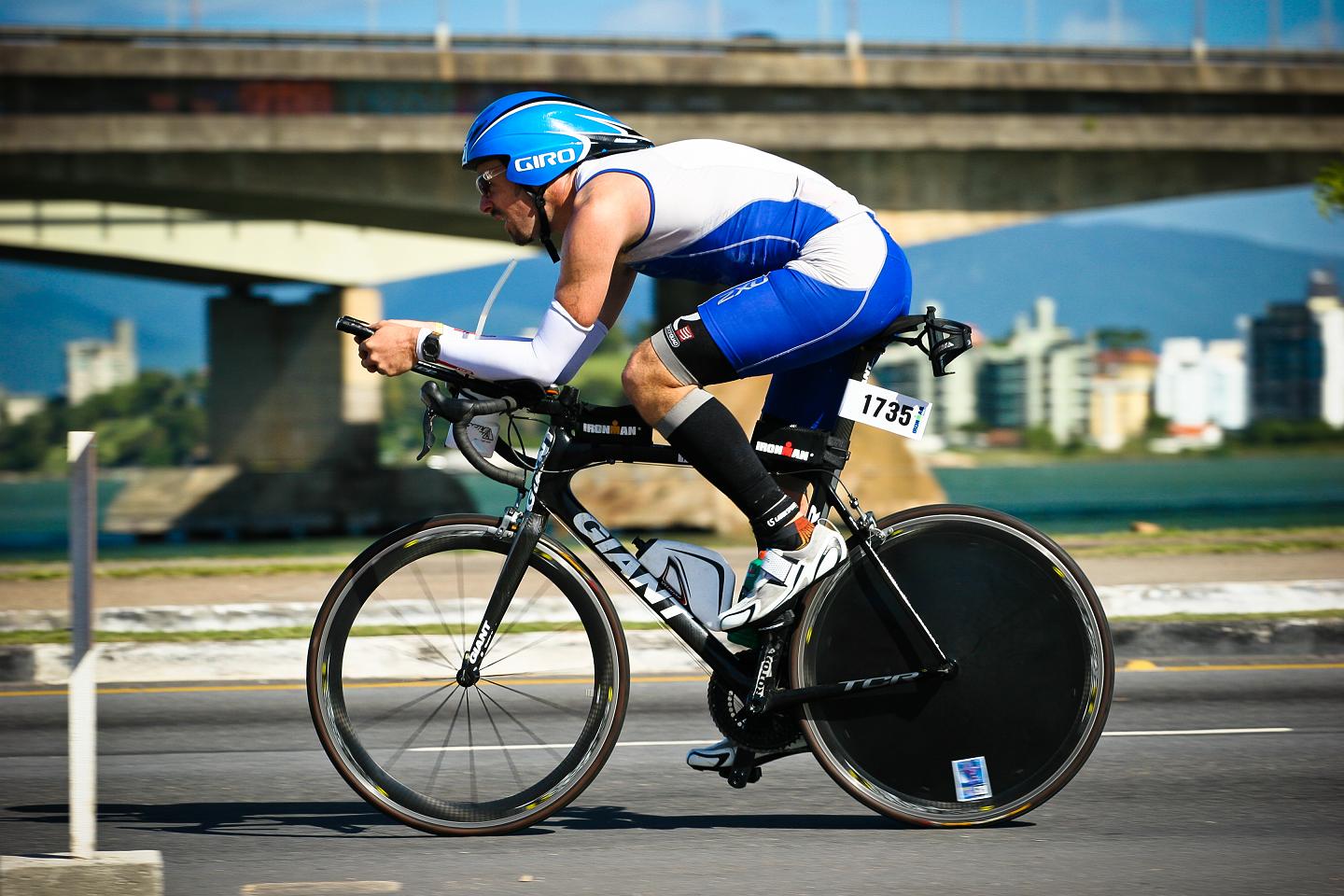
I'm sure much has been written about the epic battle between Mark Allen and Dave Scott to win the Hawaii Ironman World Championships in 1989 but it can only be a reflection of the recent rise in popularity of ultra endurance tests that it has taken 22 years for someone to write a book on the topic. That "someone" is none other than Matt Fitzgerald, a fairly prolific sports science writer, here slightly out of his usual terrain. Nevertheless, it makes for a gripping read, as the fact that I managed to read it from cover to cover over the (long) weekend testifies.
Matt's thorough research is very evident as he brings back to life the events in such detail as if they were being told the day after by those involved. True to his science background, he is sure to cite all the references he used in the appendix so it is possible to discern what was actually said and done (supposing those interviewed have not since embellished things) from journalistic dramatization.
The book took the predictable but no less valid tack of contrasting the "No Pain No Gain" sheer brute force approach of Dave Scott with the holistic and meditational approach of Mark Allen. At times it seems like the book is biased towards Dave Scott - it certainly shows sympathy for this larger than life character who was prone to periods of self doubt and binging - but I suspect that this is more due to the fact that Dave wears his heart on his sleeve while Mark is battling his personal demons behind the privacy of his outer mask and is therefore much more difficult to read let alone write about.
In my opinion Matt overstretches his analysis in applying current theories of exercise science to an event that happened nearly a quarter of a century ago. While it was a gargantuan feat (Mark Allen still holds the record from that year for the Marathon split in an Ironman) I think the author is a bit presumptuous to paint it as the pinnacle of suffering across all sports. Still, I found some of the ideas quite interesting. While I was familiar with Tim Noakes' "Central Governor" theory - that fatigue is a mechanism that the brain uses to avoid overexertion, rather than a message that the muscles send back - I was not aware of a part of the brain that is apparently activated whenever an "impulse" has to be overridden. This is the same part of the brain that lights up when we are asked to perform a "Stroop test" - in which we have to name the colour in which words are printed, made more difficult by the fact that the words themselves are the names of (other) colours. For this we have to override our impulse to read the word as opposed to saying it's colour. According to research cited by the author, this is the same part of the brain - the Anterior Cingulate Cortex - that is invoked when we override fatigue. He goes on to postulate that Dave Scott was born with a powerful ACC which allowed him to push himself harder than anyone else, while Mark Allen developed this through his difficult relationship with his father. This is an entertaining idea (nurture versus nature) but perhaps taking things a bit too far. But wouldn't it be great if we could substitute running hard series for doing a Stroop test or two?
All joking aside, after two decades in which sport science seems to have finally equated "No Pain No Gain" with "No Brain", it seems as though a return to basics might be worthwhile. After all, to win a race (or even just beat a personal best time) takes mental toughness and this mental toughness is built up through training. Dave Scott trained intuitively, trying to build into his workouts as many challenges as he could so that he would have the confidence come race day to face anything that was thrown at him. Mark Allen would rest his body so that he could perform his hard workouts more effectively; Dave would relish doing hard workouts when he was most tired, so that he could build that mental toughness. It's also true that Dave got injured a lot more often.
In summary, definitely well worth reading. I have seen several videos of the Ironman World Championships and yet, only after reading the descriptions in this book, I feel for the first time the seeds of desire to compete in Hawaii. I will keep it in mind for when I make the 50+ age group (except, by then, the standards will no doubt have sky rocketed).
Tampilkan postingan dengan label ironman. Tampilkan semua postingan
Senin, 09 Januari 2012
Selasa, 20 Desember 2011
Rabu, 01 Juni 2011
Epilogue
![]() |
| This is only a simulation... Shall I do it??? |
The journey back was nothing like as much of a nightmare as I was expecting. I recovered so quickly from Sunday's exertions that I even started to torture myself by thinking that I could have pushed myself harder. Then I remembered that the onset of cramps in my legs made it very clear to me that it would have been a very bad idea. The b*stard baggage handlers broke both quick release skewers this time, shearing one of them in two and bending the other one. They also managed to break some bits of the bike case. I guess they must have been fed up with lugging 1,800 bikes (x2) over the course of a week. Perhaps the organizers could give them a tip or something, so that next year they are a bit more respectful. I did notice that those going direct from Sao Paolo simply put their bike through with no case - if anything a bit of bubble wrap - and these came out immaculate at the other end. My bike and suitcase arrived in Madrid but, curiously enough, Iberia managed to lose my wife's suitcase in London.
Going back to work the next day was tough - it felt like I had never been away - but my colleagues were very congratulatory about my result and was stopped so many times that I arrived late to all my meetings. Some people prefer their colleagues not to know that they are participating in Ironman competitions because the amount of time they spend training can be misconstrued. However, the head of Human Resources of the company I work for, José Luis Alciturri, appeared on the news this week, announcing he was taking part in a Half Ironman. Considering that he is responsible for 180,000 employees and he is 60 years old, that is pretty damn impressive. He has already done the Maraton des Sables, so it should be "chupado" for him.
![]() |
| I told you my arms were getting bigger from all this swimming |
Anyway, in case you are curious, here are the official results:
The line I took on the swim wasn't as bad as it felt at the time, but you can see the effect of the current (as well as the point where I crashed head-on into a fellow competitor).
Incredibly, it took about 20 kilometers on the bike for my heart to settle down after the swim. I wonder if this is normal. Other than that, the bike was pretty steady
but you can distinctly see the fade on the run with about 19 kilometers to go. It wasn't a "wall" exactly but, as I described in my race report, I just started going more and more slowly for what was the same perceived effort (and perceived speed for that matter). As you can see, my heart rate went down correspondingly, so the limiting factor was not cardiovascular but fatigue.
This is the route we took (with lot's of loops that you can't see). The gap near the bottom left is the tunnel we went through 8 times.
Thanks for following me along my journey. Next stop: let's see if I can break 3 hours in the Marathon...
Selasa, 31 Mei 2011
Some photos...
Senin, 30 Mei 2011
The race
I started to get nervous just before the bike check in, which was (for me) between 7 and 8pm - a bit on the late side, considering I still had to have dinner and be up by 4am the next day. Apparently they were not letting people check in before their strictly allotted time. The check in made me realize the scale of this thing. You feel like a celebrity with so many people fussing over you. One guy had the job of asking everyone which brand of shoes they ran in. I was proud to be the only one to run in Pumas. It passed in such a whirlwind that I couldn't help having the feeling that I had forgotten something. Suddenly I was overcome by an irrational fear that my protein powders, the sachets of which I had already cut open and left on the bike, would absorb the morning dew and become an unworkable sticky mess.
Incredibly I went straight to sleep at 9pm and woke only once during the night, at 3:57am, three minutes before my alarm.
Carlos and I went down to the bikes to pump up the tires. Both of us were using disc wheels (well, mine is a disc cover really) and, to cover up the hole they have allowing pump access, we used a couple of "Invizimals" stickers that the kids had been collecting and who I had asked to choose some cool ones for good luck. My brain was still asleep at this point and, somehow, I managed to lose one of my cereal bars while I was filling up my water bottles. We then went back to the house that Carlos was renting which was when I realized that I no longer had my goggles or my numbered swim cap. It was now 6:30 - only half an hour before the start. I felt like I had shit for brains, literally. Luckily Carlos had a spare pair of goggles and a cap from a previous Ironman.
Once we got to the start we made a beeline for the nearest race official who turned out to be the sourest grumpy old bat of all the volunteers I came across. She gave me a white, unnumbered cap and impatiently snatched the one Carlos had lent me out of my hand while I tried to explain that I wanted to give it him back. After a comical scene of us both stretching the cap in a tug-of-war, I eventually won and handed it to Cassia, Carlos' wife. There we said our final goodbyes and I could see tears in the eyes of Cassia's Mother's boyfriend (the whole of her family came to support us) and it made me get emotional. It was the only time that I really got emotional in the whole race. The view of 2,000 athletes in red caps with the sun rising up over the sea was really quite spectacular.
I went to the front of the pack to try to get into the water and get used to the temperature. People were eyeing me up, clearly thinking "Who is this guy?". It was only later that I found out that the white cap I was wearing was for the professionals. You'll be able to spot me easily on the photos because I'll be the only "pro" taking the long way round.
The start was less fraught than I expected it would be and I quickly found my own space. It was impossible to sight the first red buoy - with the waves, if it came in to view it was indistinguishable (for me) from the red caps of swimmers stopping to check their line. Instead I choose someone who looked like they knew what they were doing and tried to follow them. Trouble is, anyone slow enough to swim at the speed I go at most likely doesn't know where they are going either. Before long I was all alone and wondering if I was last or lost. At the buoy I was relived to see that I wasn't so far behind as I came back into contact briefly with a number of other athletes who were bunching up at the first turn.
The course is basically the M of the "M dot" Ironman logo (just as well they leave out the dot). The diagonal stretch takes you back to the beach where you get out briefly and realize how tired you are. It was on this leg of the swim that I managed to have a full frontal collision with another swimmer who was starting the second half of the swim and who had similar navigational skills to me.
Getting back into the water for the second half was much harder than it looked; by now there were some of the biggest waves I'd seen since we got here. I got knocked off my feet several times but managed to hang on to my (I should say, Carlos') goggles.
My Garmin beeped for the fourth time, telling me I'd already swum 4,000 meters of the 3,800 - in total it reckoned my swim was 4,500 meters. Eventually I got to a point where I could put my feet down but the waves kept picking me up and shoving me in the direction of some nasty looking rocks. I finished the swim in 1:15, almost to the second what I had predicted to myself.
One nice thing about an Ironman event is that there are volunteers to help you off with your wetsuit: you just lie down and they pull (I accidentally kicked one of them in the face - it's not a maneuver that I had practiced in training). I wobbled off to where my bike was racked.
If the swim is a warmup for the bike, the bike is the prelude to the run. The idea is to start the run with as fresh legs as possible. My ride didn't get off to a very smooth start. I couldn't shift up to the big ring and when I shifted back down, the chain came off completely. I dismounted, put the chain on the big ring and started off again. I was able to adjust the gears on the go and they didn't give me any more problems. This was when I realized that I had forgotten to put on my race number. Thankfully, the umpires were not anal about applying the rules (unlike the sprint triathlon when I got fined 2 whole minutes for approaching my bike from the wrong side of the rack). I must have left it in the bike transition bag. I spent many kilometers fretting over whether I would be able to get it during the transition to running or whether I would have to ask my wife to get my spare number from the hotel.
I wish I could say that it was an emotional experience but the reality is that the overriding emotion was one of boredom. Something my eldest son, Luca, had taken to saying lately got fixed in my head "Daddy, I'm just bored". I entertained myself for a while looking at other people's bikes and tattoos and deciding which of each I would get. In Brazil there is no middle class so everyone was riding super duper aerodynamic triathlon bikes, even if it was in a sit-up-and-beg style. Sometimes I would look at the scenery or watch kids (from the other end of the socioeconomic scale) collecting the water bottles we were throwing from the bikes. I saw a couple of billboards along the way - one was an advert for Ironman II (sorry, but there will only be one Ironman and this is it) and another was a sign saying "Men at work" which seemed equally relevant.
I think I was pretty well behaved on the bike: despite the temptation to go faster to get this thing over with sooner, once my heart had settled down after the swim I kept it at around 135 bpm as agreed with Jonathan. I made an exception when overtaking in the narrow stretches and when riding up hill (allowing a maximum of 143 bpm) or into the wind. More than anything else, the sensations were good - my breathing was not noticeably more laboured than at rest and my legs felt fresh, not stressed as they had been in Lisbon. My back started to ache, though, after more than 5 hours hunched over in the aero position. I actually looked forward to the hills as a respite from the flats.
My favourite bit of the course was going through a tunnel (which we went through no less than 8 times). Here we were sheltered from the wind and I was on an even playing field with those in a more aero position. According to the Garmin, I clocked an impressive 60 kph but this may be due to losing GPS signal half way through. It may also account for the 4 extra kilometers of the bike course that the Garmin claimed. Maybe someone who rode with a wheel based speedometer can confirm this...
The only time I spoke to someone on the bike was when a Brazilian turned to me to comment on the strong headwind. I told him that at least he had a nice view. I suppose it must seem very chauvinistic and pathetic, but when you are suffering like this, it is refreshing to see a girl ahead pedaling in a skimpy pair of bikini bottoms.
My family was diligently waiting for me in Jurere both times and I waved frantically to them as I passed and tried to smile and look like I was at least enjoying myself. I measured out my time counting how long it would be until I saw them the next time. The bike took 5:30, again, more or less as I had envisioned (give or take the extra 4 km).
In the transition tent I was able to recover my race number, so that was one less thing to worry about. I started the run well. I ran at around 150 bpm, well under my "budget" of 160 bpm. Even so, this felt hard enough and translated into a good speed of around 12.5 - 13 kph. At this rate I would do a good time and, more importantly, it would be over sooner.
I started to wish that I had made a toilet stop in the transition area. Then I saw some portaloos and thought that I would hang on until the next ones but, suddenly I felt an "apretón" and I virtually had to sprint to the cabin. Wow, I felt so much better after that. By the way, there was plenty of toilet paper in case you were wondering.
There were a couple of ridiculous hills on the course that you were a fool to climb doing anything but walking. After about 13 kms, I suddenly remembered Pablo's pledge, to sponsor me an extra euro for each kilometer run at 12 kph (5 minutes per km) or faster. Apart from the hills I already had at least 10 under my belt and now I was motivated to bank the rest. I saw my family at the Half Marathon point and smiled at them and blew them kisses - I was going well and continually passing shuffling people who had overdone the bike. I must have looked so good that the race officials insisted on sending me on the third loop before I had even done the second - either that or, what is more likely is that they mistook my white sleeves for the hair bands they gave out on completion of each loop.
At some point the kilometer splits suddenly took a turn for the worse and - even though I felt like I was running just as hard and fast as before - I was now taking 5:30 to cover one kilometer. Never mind, I thought, I'll still get a good time at this pace. This is the thing about the Ironman, you start with some dreams and aspirations and you spend the rest of the day revising them, in my case, downwards.
I don't believe in God or Heaven, but I started talking to Neil, dedicating kilometers to him and apologizing for them being slow ones. 5:30 soon became 6:00 and 6:00 became 6:20 per kilometer. It was clear: now it was a question of finishing. I tried pushing a little - my pulse was lower than ever - but the twinges of cramps warned me off (in spite of the 20 salt tablets I had swallowed). I had been carefully pacing myself all the race, waiting for the moment to really grit my teeth and so it was frustrating not to be able to dig deeper, to feel as though I was pushing myself as hard as I could go (even though the incipient cramps assured me that it was indeed the case). My stomach also started to protest and I swallowed down very little of the (now) sickly warm gels that I had picked up for the second half of the Marathon in the Special Needs stop.
The organization of the event was impeccable and the island really lives the whole Ironman experience so I was really surprised how little the crowds cheered. In Madrid, there is more support in a local 10k race. Of course, 8-17 hours is a long time to be clapping. As this was Brazil I expected a Samba or Batucada band but there was no music. Still, I've learned something about why I race. It's the same reason why I love deejaying: I get a real kick out of the crowd and I thrive off the positive feedback loop. What was excellent, though, were the food and water stops that were scattered every couple of kilometers along the run course. I would drink either coke, water or both at every stop and throw an ice cold cup of water over my head and down my back.
One kilometer to go. Now I felt I could let myself enjoy it. I repeated to myself "I'm going to be a f***ing Ironman! I'm going to be a f***ing Ironman!". I took out the little photo I had of Neil, climbing a steep hill on his bike in readiness to hold it up for the finisher's photo. There was my family! The boys ran with me to the line and I had done it, I had f***ing done it. Unbeknownst to me at the time, about 10,000 kilometers away, a group of Neil's deejay friends were celebrating his life at a nightclub in Gateshead, playing out all his favourite and highly sought after tunes.
Now it was time to try to repair the damage I had done to my body. My pee was brown which means that my body had started to break down muscle fibers to feed off the proteins they contained. If you want to get a six pack in a single day, then do an Ironman - I looked like an escaped prisoner of war:
Carlos came to find me in the survivor's - I mean finishers - tent. He had broken the ten hour barrier (last year he was off by 23 seconds)! My other friends also did well - Christian did a jaw dropping 9:12 and will almost certainly be selected for the World Championships in Kona, Hawaii and Michel did 13 and a half hours. A long but good day.
![]() |
| Just think how much money is sitting here |
Carlos and I went down to the bikes to pump up the tires. Both of us were using disc wheels (well, mine is a disc cover really) and, to cover up the hole they have allowing pump access, we used a couple of "Invizimals" stickers that the kids had been collecting and who I had asked to choose some cool ones for good luck. My brain was still asleep at this point and, somehow, I managed to lose one of my cereal bars while I was filling up my water bottles. We then went back to the house that Carlos was renting which was when I realized that I no longer had my goggles or my numbered swim cap. It was now 6:30 - only half an hour before the start. I felt like I had shit for brains, literally. Luckily Carlos had a spare pair of goggles and a cap from a previous Ironman.
![]() |
| Did someone nick my goggles and swim cap? |
I went to the front of the pack to try to get into the water and get used to the temperature. People were eyeing me up, clearly thinking "Who is this guy?". It was only later that I found out that the white cap I was wearing was for the professionals. You'll be able to spot me easily on the photos because I'll be the only "pro" taking the long way round.
The start was less fraught than I expected it would be and I quickly found my own space. It was impossible to sight the first red buoy - with the waves, if it came in to view it was indistinguishable (for me) from the red caps of swimmers stopping to check their line. Instead I choose someone who looked like they knew what they were doing and tried to follow them. Trouble is, anyone slow enough to swim at the speed I go at most likely doesn't know where they are going either. Before long I was all alone and wondering if I was last or lost. At the buoy I was relived to see that I wasn't so far behind as I came back into contact briefly with a number of other athletes who were bunching up at the first turn.
The course is basically the M of the "M dot" Ironman logo (just as well they leave out the dot). The diagonal stretch takes you back to the beach where you get out briefly and realize how tired you are. It was on this leg of the swim that I managed to have a full frontal collision with another swimmer who was starting the second half of the swim and who had similar navigational skills to me.
Getting back into the water for the second half was much harder than it looked; by now there were some of the biggest waves I'd seen since we got here. I got knocked off my feet several times but managed to hang on to my (I should say, Carlos') goggles.
My Garmin beeped for the fourth time, telling me I'd already swum 4,000 meters of the 3,800 - in total it reckoned my swim was 4,500 meters. Eventually I got to a point where I could put my feet down but the waves kept picking me up and shoving me in the direction of some nasty looking rocks. I finished the swim in 1:15, almost to the second what I had predicted to myself.
One nice thing about an Ironman event is that there are volunteers to help you off with your wetsuit: you just lie down and they pull (I accidentally kicked one of them in the face - it's not a maneuver that I had practiced in training). I wobbled off to where my bike was racked.
If the swim is a warmup for the bike, the bike is the prelude to the run. The idea is to start the run with as fresh legs as possible. My ride didn't get off to a very smooth start. I couldn't shift up to the big ring and when I shifted back down, the chain came off completely. I dismounted, put the chain on the big ring and started off again. I was able to adjust the gears on the go and they didn't give me any more problems. This was when I realized that I had forgotten to put on my race number. Thankfully, the umpires were not anal about applying the rules (unlike the sprint triathlon when I got fined 2 whole minutes for approaching my bike from the wrong side of the rack). I must have left it in the bike transition bag. I spent many kilometers fretting over whether I would be able to get it during the transition to running or whether I would have to ask my wife to get my spare number from the hotel.
I wish I could say that it was an emotional experience but the reality is that the overriding emotion was one of boredom. Something my eldest son, Luca, had taken to saying lately got fixed in my head "Daddy, I'm just bored". I entertained myself for a while looking at other people's bikes and tattoos and deciding which of each I would get. In Brazil there is no middle class so everyone was riding super duper aerodynamic triathlon bikes, even if it was in a sit-up-and-beg style. Sometimes I would look at the scenery or watch kids (from the other end of the socioeconomic scale) collecting the water bottles we were throwing from the bikes. I saw a couple of billboards along the way - one was an advert for Ironman II (sorry, but there will only be one Ironman and this is it) and another was a sign saying "Men at work" which seemed equally relevant.
I think I was pretty well behaved on the bike: despite the temptation to go faster to get this thing over with sooner, once my heart had settled down after the swim I kept it at around 135 bpm as agreed with Jonathan. I made an exception when overtaking in the narrow stretches and when riding up hill (allowing a maximum of 143 bpm) or into the wind. More than anything else, the sensations were good - my breathing was not noticeably more laboured than at rest and my legs felt fresh, not stressed as they had been in Lisbon. My back started to ache, though, after more than 5 hours hunched over in the aero position. I actually looked forward to the hills as a respite from the flats.
My favourite bit of the course was going through a tunnel (which we went through no less than 8 times). Here we were sheltered from the wind and I was on an even playing field with those in a more aero position. According to the Garmin, I clocked an impressive 60 kph but this may be due to losing GPS signal half way through. It may also account for the 4 extra kilometers of the bike course that the Garmin claimed. Maybe someone who rode with a wheel based speedometer can confirm this...
The only time I spoke to someone on the bike was when a Brazilian turned to me to comment on the strong headwind. I told him that at least he had a nice view. I suppose it must seem very chauvinistic and pathetic, but when you are suffering like this, it is refreshing to see a girl ahead pedaling in a skimpy pair of bikini bottoms.
My family was diligently waiting for me in Jurere both times and I waved frantically to them as I passed and tried to smile and look like I was at least enjoying myself. I measured out my time counting how long it would be until I saw them the next time. The bike took 5:30, again, more or less as I had envisioned (give or take the extra 4 km).
In the transition tent I was able to recover my race number, so that was one less thing to worry about. I started the run well. I ran at around 150 bpm, well under my "budget" of 160 bpm. Even so, this felt hard enough and translated into a good speed of around 12.5 - 13 kph. At this rate I would do a good time and, more importantly, it would be over sooner.
I started to wish that I had made a toilet stop in the transition area. Then I saw some portaloos and thought that I would hang on until the next ones but, suddenly I felt an "apretón" and I virtually had to sprint to the cabin. Wow, I felt so much better after that. By the way, there was plenty of toilet paper in case you were wondering.
There were a couple of ridiculous hills on the course that you were a fool to climb doing anything but walking. After about 13 kms, I suddenly remembered Pablo's pledge, to sponsor me an extra euro for each kilometer run at 12 kph (5 minutes per km) or faster. Apart from the hills I already had at least 10 under my belt and now I was motivated to bank the rest. I saw my family at the Half Marathon point and smiled at them and blew them kisses - I was going well and continually passing shuffling people who had overdone the bike. I must have looked so good that the race officials insisted on sending me on the third loop before I had even done the second - either that or, what is more likely is that they mistook my white sleeves for the hair bands they gave out on completion of each loop.
At some point the kilometer splits suddenly took a turn for the worse and - even though I felt like I was running just as hard and fast as before - I was now taking 5:30 to cover one kilometer. Never mind, I thought, I'll still get a good time at this pace. This is the thing about the Ironman, you start with some dreams and aspirations and you spend the rest of the day revising them, in my case, downwards.
I don't believe in God or Heaven, but I started talking to Neil, dedicating kilometers to him and apologizing for them being slow ones. 5:30 soon became 6:00 and 6:00 became 6:20 per kilometer. It was clear: now it was a question of finishing. I tried pushing a little - my pulse was lower than ever - but the twinges of cramps warned me off (in spite of the 20 salt tablets I had swallowed). I had been carefully pacing myself all the race, waiting for the moment to really grit my teeth and so it was frustrating not to be able to dig deeper, to feel as though I was pushing myself as hard as I could go (even though the incipient cramps assured me that it was indeed the case). My stomach also started to protest and I swallowed down very little of the (now) sickly warm gels that I had picked up for the second half of the Marathon in the Special Needs stop.
The organization of the event was impeccable and the island really lives the whole Ironman experience so I was really surprised how little the crowds cheered. In Madrid, there is more support in a local 10k race. Of course, 8-17 hours is a long time to be clapping. As this was Brazil I expected a Samba or Batucada band but there was no music. Still, I've learned something about why I race. It's the same reason why I love deejaying: I get a real kick out of the crowd and I thrive off the positive feedback loop. What was excellent, though, were the food and water stops that were scattered every couple of kilometers along the run course. I would drink either coke, water or both at every stop and throw an ice cold cup of water over my head and down my back.
One kilometer to go. Now I felt I could let myself enjoy it. I repeated to myself "I'm going to be a f***ing Ironman! I'm going to be a f***ing Ironman!". I took out the little photo I had of Neil, climbing a steep hill on his bike in readiness to hold it up for the finisher's photo. There was my family! The boys ran with me to the line and I had done it, I had f***ing done it. Unbeknownst to me at the time, about 10,000 kilometers away, a group of Neil's deejay friends were celebrating his life at a nightclub in Gateshead, playing out all his favourite and highly sought after tunes.
![]() |
| The medal is the coolest medal I have ever seen |
![]() |
| I may not look it, but I am pleased |
Minggu, 29 Mei 2011
Thanks...
...to my wife and kids (not to mention my boss) for putting up with all my hours of training and occasional frequent bad moods
...to Jonathan for designing a brilliant training program, for the moral support these last three years and for helping me go from being a boom bust runner to a steadily improving triathlete
...to Carlos and Cassia for the support both logistically and emotionally
(and in no particular order)
...to Simon and Sonia for looking after the kids on a critical weekend when I had 11 and a half hours of training to do and my wife was away in Africa
...to the tri4life crowd José Juan, Lola, Inés, Ferrán, Nacho, Silvia, Ricardo, Alberto, Alex, Eloy, Ana, Quique, Pedro, etc., for the company on the few long rides I didn't do alone (and for putting this crazy idea in my head in the first place)
...to Diego from la Universidad de Europa for patiently doing all the physiological tests on me
...to Paloma for sorting out my back as well as various other problems along the way
...to Fernando and Marta from A Manos Fisios for helping me out with my shoulder
...to Juan Gutiérez and Manolo and other (anonymous) cyclists who have helped me fix punctures and get on my way again
...to Emilio for his sound advice (SantÃas, not BotÃn)
...to my work colleagues (John, Juan Porras, ...) for giving me a lift home on the days when I ran in but didn't have (or want) to run back
...to the guys (Marcos, Paloma II, ...) in the work gym for letting me use their locker to hang up my spare suit and for turning a blind eye every time I took two towels instead of one
...to Victor for letting me park my bike (and hang my sweaty kit out to dry) at the back of his parking space
...to Santander for being a company which puts value on exercise and being healthy
...to the folks at Zermatt bikes in Pozuelo for "tuning" my bike and to the guys at Chousa, also in Pozuelo, for indexing my gears to perfection
...to Angel Pérez for helping me choose my bike in the first place
...to my fellow triathletes at Aguaverde for helping me get started in triathlon
...to my non-triathlon friends who I have been neglecting
...to all those who have been following my journey and especially those that have left comments on this blog
...to everyone who has sponsored me on behalf of the British Heart Foundation
...to the Suddes Family for allowing me to do this in Neil's memory
...to Neil Suddes for being an inspiration in my life
To become an Ironman may be a solitary pursuit but it is one that is impossible to do alone.
...to Jonathan for designing a brilliant training program, for the moral support these last three years and for helping me go from being a boom bust runner to a steadily improving triathlete
...to Carlos and Cassia for the support both logistically and emotionally
(and in no particular order)
...to Mario Pessini for putting me in touch with Jonathan in the first place
...to Luis Gutiérez for helping me acquire a reasonable swimming technique...to Simon and Sonia for looking after the kids on a critical weekend when I had 11 and a half hours of training to do and my wife was away in Africa
...to the tri4life crowd José Juan, Lola, Inés, Ferrán, Nacho, Silvia, Ricardo, Alberto, Alex, Eloy, Ana, Quique, Pedro, etc., for the company on the few long rides I didn't do alone (and for putting this crazy idea in my head in the first place)
...to Diego from la Universidad de Europa for patiently doing all the physiological tests on me
...to Paloma for sorting out my back as well as various other problems along the way
...to Fernando and Marta from A Manos Fisios for helping me out with my shoulder
...to Juan Gutiérez and Manolo and other (anonymous) cyclists who have helped me fix punctures and get on my way again
...to Emilio for his sound advice (SantÃas, not BotÃn)
...to my work colleagues (John, Juan Porras, ...) for giving me a lift home on the days when I ran in but didn't have (or want) to run back
...to the guys (Marcos, Paloma II, ...) in the work gym for letting me use their locker to hang up my spare suit and for turning a blind eye every time I took two towels instead of one
...to Victor for letting me park my bike (and hang my sweaty kit out to dry) at the back of his parking space
...to Santander for being a company which puts value on exercise and being healthy
...to the folks at Zermatt bikes in Pozuelo for "tuning" my bike and to the guys at Chousa, also in Pozuelo, for indexing my gears to perfection
...to Angel Pérez for helping me choose my bike in the first place
...to my fellow triathletes at Aguaverde for helping me get started in triathlon
...to my non-triathlon friends who I have been neglecting
...to all those who have been following my journey and especially those that have left comments on this blog
...to everyone who has sponsored me on behalf of the British Heart Foundation
...to the Suddes Family for allowing me to do this in Neil's memory
...to Neil Suddes for being an inspiration in my life
To become an Ironman may be a solitary pursuit but it is one that is impossible to do alone.
Sabtu, 28 Mei 2011
Floripa part II
The whole island has gone Ironman crazy. It's virtually impossible to find someone who is not wearing the yellow wristband

and even the waiters and waitresses are all wearing t-shirts with the M-dot logo or some reference to triathlon. At a time of year that would otherwise be off season, the islanders are happy for the business that the Ironman brings and it shows in their hospitality and enthusiasm. I can imagine that Kona is like this, only more intense.
As it is winter here, it gets dark really early. In fact, if I want a finisher's photo without flash, I am going to have to finish in less than 10:15! The advantage is that it has been really easy for the whole family to go to bed at around 9pm and get up at 6am, so an early start at 4am shouldn't be a problem - maybe the family will accompany me to the start after all.
The last of my pre-Ironman duties is to do the bike check-in. I have been assigned the last slot of the day - 7pm to 8pm - which is a bit on the late side, so I'm going to try my luck at squeezing in to an earlier slot. I want to be already sitting down to dinner at 7pm. At the check-in, I have to present not only the bike but the transition bags which must contain everything I will need for going from the swim to the bike and from the bike to the run. I won't have access to these tomorrow before the race so I'd better not forget anything! I don't think I will bother with the "special needs" bag for the bike but, in the special needs bag which you get handed at the half-way point in the run, I'll put some spare salt caps and two small bottles of isogels.
Yesterday we watched the DVD of the race from 2010. It may be a predominantly flat course but the hills that there are are real hills, with a gradient of about 20%. I'll just have to keep an eye on my pulse and walk up them if necessary.
I've been trying very hard not to spend too much time, energy or money in the expo. Luckily everything is at least twice as expensive as back home otherwise I might have fallen foul of the temptation to by a cool 3 or 4 spoke aero wheel (shaving a whopping 30 seconds from my time no doubt) or worse. While I was waiting for the official store to open, I asked someone standing next to me in Portuñol if he knew when they would open; he said "Hey, you're Rob, right? From Rust to Ironman!". It was Christian, who I had yet to meet, the one who took us to my fundraising target of 3,000 pounds.
By the time I next post, I will be an Ironman!! By the way, this is the tattoo that won my tattoo design contest - I think it is great but now I just have to see whether I have the balls to actually have it inked...


and even the waiters and waitresses are all wearing t-shirts with the M-dot logo or some reference to triathlon. At a time of year that would otherwise be off season, the islanders are happy for the business that the Ironman brings and it shows in their hospitality and enthusiasm. I can imagine that Kona is like this, only more intense.
As it is winter here, it gets dark really early. In fact, if I want a finisher's photo without flash, I am going to have to finish in less than 10:15! The advantage is that it has been really easy for the whole family to go to bed at around 9pm and get up at 6am, so an early start at 4am shouldn't be a problem - maybe the family will accompany me to the start after all.
The last of my pre-Ironman duties is to do the bike check-in. I have been assigned the last slot of the day - 7pm to 8pm - which is a bit on the late side, so I'm going to try my luck at squeezing in to an earlier slot. I want to be already sitting down to dinner at 7pm. At the check-in, I have to present not only the bike but the transition bags which must contain everything I will need for going from the swim to the bike and from the bike to the run. I won't have access to these tomorrow before the race so I'd better not forget anything! I don't think I will bother with the "special needs" bag for the bike but, in the special needs bag which you get handed at the half-way point in the run, I'll put some spare salt caps and two small bottles of isogels.
Yesterday we watched the DVD of the race from 2010. It may be a predominantly flat course but the hills that there are are real hills, with a gradient of about 20%. I'll just have to keep an eye on my pulse and walk up them if necessary.
I've been trying very hard not to spend too much time, energy or money in the expo. Luckily everything is at least twice as expensive as back home otherwise I might have fallen foul of the temptation to by a cool 3 or 4 spoke aero wheel (shaving a whopping 30 seconds from my time no doubt) or worse. While I was waiting for the official store to open, I asked someone standing next to me in Portuñol if he knew when they would open; he said "Hey, you're Rob, right? From Rust to Ironman!". It was Christian, who I had yet to meet, the one who took us to my fundraising target of 3,000 pounds.
By the time I next post, I will be an Ironman!! By the way, this is the tattoo that won my tattoo design contest - I think it is great but now I just have to see whether I have the balls to actually have it inked...

Jumat, 27 Mei 2011
Floripa
We spent the day lounging by the beach, trying not to get sunburnt. It's one of those beaches that is so perfect it seems as though it has been manufactured for Disneyland - the sand is so fine it actually squeaks under your feet. We had lunch with Carlos and his extended family in a Picanharia where you eat what you like and pay what you weigh (the food, that is).
Of course, the very first thing I did on arriving to the pousada was put the bike back together. The idiotic baggage handlers hadn't been so careful after all and had bent the quick release skewer of the front wheel. Just as well that I had used a couple of spare skewers for exactly that reason.

It was time to try out the bike and it seemed fine except that it wouldn't shift up to the big ring. I took it to Kona Bikes at the Expo and it turned out that it had taken a little knock after all. They noticed that the small ring had actually been installed backwards!!! That explains why it was sometimes slow to catch on when shifting down.
If the muscles on the transit bus were intimidating this was nothing compared to the pure sex of the bikes blatantly on display. I think mine is the only non-triathlon specific bike of the lot! Although it is a damn good one at that.
It's hard to put my finger on but there is something about this event, the organization, that just puts it on a different level from anything else I have ever done. Maybe it's just that everything is so damned expensive! No, it's more than that, this is The Ironman. Everything is branded, down to the various plastic bags you fill before the event with the things you will need at the transitions and at the "special needs" stops along the bike and run courses.
It seems like everyone on the island is competing - every hotel room has a bike poking out of it, people are running and cycling up and down the main drag, others are wandering about in wetsuits. It's a shame that the roads are not better quality - I can just envisage my water bottles being ejected on every bump. Also, it doesn't look as though it is quite such a flat course after all - the map is very misleading - but at least it's the same for everyone.
Of course, the very first thing I did on arriving to the pousada was put the bike back together. The idiotic baggage handlers hadn't been so careful after all and had bent the quick release skewer of the front wheel. Just as well that I had used a couple of spare skewers for exactly that reason.

It was time to try out the bike and it seemed fine except that it wouldn't shift up to the big ring. I took it to Kona Bikes at the Expo and it turned out that it had taken a little knock after all. They noticed that the small ring had actually been installed backwards!!! That explains why it was sometimes slow to catch on when shifting down.
If the muscles on the transit bus were intimidating this was nothing compared to the pure sex of the bikes blatantly on display. I think mine is the only non-triathlon specific bike of the lot! Although it is a damn good one at that.
It's hard to put my finger on but there is something about this event, the organization, that just puts it on a different level from anything else I have ever done. Maybe it's just that everything is so damned expensive! No, it's more than that, this is The Ironman. Everything is branded, down to the various plastic bags you fill before the event with the things you will need at the transitions and at the "special needs" stops along the bike and run courses.
It seems like everyone on the island is competing - every hotel room has a bike poking out of it, people are running and cycling up and down the main drag, others are wandering about in wetsuits. It's a shame that the roads are not better quality - I can just envisage my water bottles being ejected on every bump. Also, it doesn't look as though it is quite such a flat course after all - the map is very misleading - but at least it's the same for everyone.
Kamis, 26 Mei 2011
The journey
I spent most of the day meticulously packing my bikebox and my suitcase (which is mainly full of gels that I won't be taking home). In every place I have been in the last few days, I have found myself thinking, "Next time I'm here I will be an Ironman TOUCH WOOD!".
Just as well we arrived at the airport 2 hours before the flight to London - initially we were on standby due to overbooking. Maybe Grimsvötn was to blame. Amazingly, the bikebox with bike, wetsuit, casual clothes and water bottles only weighed about 18 kilos but it still cost 75 euros to send as oversize baggage. To be honest I prefer to pay extra as it probably increases the chances of it arriving in Sao Paolo in perfect condition. The journey is a long one, of Ironman proportions in terms of time, but I'm reading Lance Armstrong's "It's not about the bike" which I had been saving to keep me inspired.
I started to get paranoid on the plane hearing everyone coughing, sneezing and spluttering, that I would pick up some virus through the air conditioning. I even considered getting a mask as a first line of defense! My wife is currently suffering from some kind of virus so I just hope the incubation period is long enough or that my body can fight it off at no extra cost...
The flight to Sao Paolo actually left ahead of the scheduled time. That's the first time it's ever happened to me, and I have travelled a fair bit (not all that long ago I had a platinum Iberia card!). Now the trick is, how to sleep on the plane when they insist on keeping the lights on and bothering you every five minutes. In any case, the idea of being able to just wake up in Brazil is too exciting. My family has already conked out. The time in Floripa is 5 hours behind Madrid which means that getting up at 4am on Sunday is like having a lie in. (As I write this, I realize that 9am on a Sunday counts as a lie in when it wasn't so long ago that I might get up at 11am or later at the weekend.) Rather than trying to adjust to the time difference I'm going to adjust to only 2 hours difference and try to be in bed by 9 every evening (provided we can find restaurants willing to serve dinner at 7pm which, in Spain, would be mission impossible). Trouble is that the kids are harder to trick into going to bed while the sun is still shining. In the end I managed to sleep reasonably well and even watched Brighton Rock, getting tantalizingly close to the end before the seatbelts sign came on.

I felt my adrenaline levels noticeably rise on the transit bus on the way to the Floripa flight: there were an unusual number (even for Brazil) of tanned, toned and muscular bodies and the M-dot logo was everywhere you looked. It made me think of the first time I went to Brazil, over 10 years ago, when I was embarrassed to go to the beach with my soft, white body. At least this time it's not so bad but the psych-out factor is there all the same.

I was so relieved to see that the bike had arrived intact and without too many signs of abuse on the outside of the bikebox. Now, it seems, I have no excuses left but to DO THIS THING!!!
Just as well we arrived at the airport 2 hours before the flight to London - initially we were on standby due to overbooking. Maybe Grimsvötn was to blame. Amazingly, the bikebox with bike, wetsuit, casual clothes and water bottles only weighed about 18 kilos but it still cost 75 euros to send as oversize baggage. To be honest I prefer to pay extra as it probably increases the chances of it arriving in Sao Paolo in perfect condition. The journey is a long one, of Ironman proportions in terms of time, but I'm reading Lance Armstrong's "It's not about the bike" which I had been saving to keep me inspired.
I started to get paranoid on the plane hearing everyone coughing, sneezing and spluttering, that I would pick up some virus through the air conditioning. I even considered getting a mask as a first line of defense! My wife is currently suffering from some kind of virus so I just hope the incubation period is long enough or that my body can fight it off at no extra cost...
The flight to Sao Paolo actually left ahead of the scheduled time. That's the first time it's ever happened to me, and I have travelled a fair bit (not all that long ago I had a platinum Iberia card!). Now the trick is, how to sleep on the plane when they insist on keeping the lights on and bothering you every five minutes. In any case, the idea of being able to just wake up in Brazil is too exciting. My family has already conked out. The time in Floripa is 5 hours behind Madrid which means that getting up at 4am on Sunday is like having a lie in. (As I write this, I realize that 9am on a Sunday counts as a lie in when it wasn't so long ago that I might get up at 11am or later at the weekend.) Rather than trying to adjust to the time difference I'm going to adjust to only 2 hours difference and try to be in bed by 9 every evening (provided we can find restaurants willing to serve dinner at 7pm which, in Spain, would be mission impossible). Trouble is that the kids are harder to trick into going to bed while the sun is still shining. In the end I managed to sleep reasonably well and even watched Brighton Rock, getting tantalizingly close to the end before the seatbelts sign came on.

I felt my adrenaline levels noticeably rise on the transit bus on the way to the Floripa flight: there were an unusual number (even for Brazil) of tanned, toned and muscular bodies and the M-dot logo was everywhere you looked. It made me think of the first time I went to Brazil, over 10 years ago, when I was embarrassed to go to the beach with my soft, white body. At least this time it's not so bad but the psych-out factor is there all the same.

I was so relieved to see that the bike had arrived intact and without too many signs of abuse on the outside of the bikebox. Now, it seems, I have no excuses left but to DO THIS THING!!!
Senin, 23 Mei 2011
Ash Wednesday
I just heard that the bloody volcano in Iceland is once again spewing it's aircraft unfriendly ash into the atmosphere and that some flights out of the UK are already being cancelled. Guess where we are making our first stopover tomorrow? Yep, you guessed it - London.
The bastard volcano already screwed up my birthday last year, leaving me stranded a week in London and Paris but I did make it to the Half Ironman in Lisbon by the skin of my teeth.
If I can't get to Brazil on time I swear I will do the Ironman on my own, swimming in a lake and riding and running around here. Nothing is going to stop me, not even you, Grimsvötn!!
The bastard volcano already screwed up my birthday last year, leaving me stranded a week in London and Paris but I did make it to the Half Ironman in Lisbon by the skin of my teeth.
If I can't get to Brazil on time I swear I will do the Ironman on my own, swimming in a lake and riding and running around here. Nothing is going to stop me, not even you, Grimsvötn!!
Following the Ironman
So after months of preparation and discomfort there stand only a matter of hours of hard labour before the euphoria of having achieved something incredible. I am, of course, talking about my brother's wife who is at the point of giving birth to my first nephew. Wouldn't it be great if he popped out just as I crossed the line? ;-)
I'm not sure what kind of live coverage there will be during the Brazil Ironman but you might want to try logging on to this website on Sunday from 11am GMT (12pm Madrid time). It might also be worth looking at the official website for the event which has been updated in the last few days (it's still a bit crap, I hope no reflection of the organization of the event!).
As for news about how I fare (not to mention about my nephew) I'll try to post something here as soon as I possibly can.
I'm not sure what kind of live coverage there will be during the Brazil Ironman but you might want to try logging on to this website on Sunday from 11am GMT (12pm Madrid time). It might also be worth looking at the official website for the event which has been updated in the last few days (it's still a bit crap, I hope no reflection of the organization of the event!).
As for news about how I fare (not to mention about my nephew) I'll try to post something here as soon as I possibly can.
The weather in Floripa
When I was growing up, the weather was the butt of many jokes - "The forecast says it will be sunny so we'd better take an umbrella", etc. Somewhere along the way, it seems as though either the forecasts have got better or we have become more gullible. I've started to watch the weather forecast much more often lately as there have been days that have started off sunny and ended up with a storm - not fun if you are halfway through a long ride and without a jacket. But it still seems to be fairly unreliable. I often wonder whether someone has ever gone to the trouble of benchmarking the various weather forecast providers against what actually happened in reality - it wouldn't be such a difficult thing to do.
So here's my attempt. Above is the forecast for race day in Florianópolis, one week before the event. Let's see how much it changes between now and the day in question! It looks like it could be quite windy which is not ideal but the relative humidity is much lower than I have seen it (yes, I've been following the weather in Floripa for some time now...). (By the way, the times look as though they are according to the Spanish clock which is 5 hours ahead. This means that getting up on race day will be like having a lie in!)
Jumat, 20 Mei 2011
Nice surprise...
I just got an email from Carlos (Kaki) who is on his way to Brazil right now (lucky sod). His wife has made us all (kids included) a t-shirt especially for the event!! What a great idea...
I'm already so excited I don't know how I am going to get through these last few days!
Results of lactate test & Ironman race plan
At first sight, it looks as though I have got worse since the tests I did back in December and January. But the main purpose of this test was to measure the blood lactate levels and this meant that the steps in the "ramp protocol" were much coarser. That is to say, the Watts at which I was pedaling were incremented by 50W every 3 minutes and I ran a whole kilometer at a pace that was increased by 10 seconds per kilometer each time. The important point about the test is to try to establish the pace / effort for which I should aim to do each leg of the Ironman. All we can really be sure about is that my heart rate should be somewhere between my Aerobic Threshold (AeT or UAE) and my Anaerobic Threshold (AT or UAN) - the question is where? Overcook it and the punishment will be severe!
On the other had, I scored very highly on efficiency on the bike. According to calculations done by Jonathan and Diego, this means that I am able to convert a remarkably high proportion of the energy I metabolize directly into Watts on the bike ergometer. I suppose that is what one should hope for after all this training - I can't expect to be especially powerful as that is not the aim but I should be efficient.
So I've just been to see Jonathan for the last time before the race. We sat down and poured over the numbers from this test and the tests I had done previously. Here's where art meets science and years of experience (and, particularly, years of experience of coaching me) comes into play. We decided to take the upper threshold on the bike (AT) from the previous test because it seems too low, especially considering that - if my reading of the random heart rate profile from Lisbon is roughly correct - I was cruising along at about 150bpm which would be over my AT according to this test. We also took the AT for the run from the last test as this time we didn't go as far as this. He did say that my lactate levels were some of the lowest he had seen in any athlete(!) which indicates that the training has replaced many of my muscle fibers with the slow twitch endurance kind. (By the way, as I understand it, you get DOMS - Delayed Onset Muscle Soreness - after either a very intense activity or a low intensity prolonged activity: both produce micro tears in the muscle fibers which must be repaired. The rebuilding of the muscle gives the body an opportunity to change the fibers from one type to another although it is widely believed that many of our muscle fibers are of one type and cannot be commuted to the other.)
The strategy is to do the swim at "A2", which corresponds to half way between my AeT and AT for swimming; as I don't really have any reference at this point other than the training I have done, I will swim as hard as I can while maintaining what form I have, as I did in Lisbon. I've a feeling that if I try any harder I'll actually end up going more slowly, not to mention blowing up.
Jonathan says that I should be on the cautious side on the bike: after all this is double the distance of a Half Ironman (duh!). My Achilles heel is heat and humidity tolerance and I have had a couple of races where I have overdone it and ended up suffering at the hands of the dreaded cramps. On the other hand, if I don't push it too hard, the run has every possibility of being fast and, perhaps more importantly, actually enjoyable in a sort of Ironman kind of way. All the same, I'm still not as confident with my heart rate zones and exertion on the bike so the idea is to not strictly adhere to a pulse rate but to go by feeling to some extent. Being prudent, this feeling should correspond to about a quarter way between AeT (128 bpm) and AT (156 bpm), or about 135 bpm - or, in reference to my training, half way between where I did 90% of my rides and the medium intensity (CMED). There are a couple of small hills on the course, which are pathetic by Madrid standards but can, nevertheless, send your heart rate spiking through the roof: for the hills, I can permit myself to go up to but not beyond my AT (156 bpm). In the Half Ironman, I remember that from a cardiovascular point of view, it was not too taxing on the bike - I was breathing about as heavily as I would on a prank call if if ever did such things - but the legs felt constantly tight and uncomfortable and I even wondered how it would be to run on them afterwards. As we are talking about doing twice the distance on the bike this time, before embarking on the Marathon, my legs should not feel so stressed.
The run is where I can hopefully let rip. The idea is to keep my heart rate between around 156 and 161 bpm. In any case, I have much more intuition for how to pace myself running, even if it is after having swum and cycled. More than anything else, I just hope I can get into a good rhythm. There's a certain running speed which may not be the fastest at which I can run a particular distance that just feels like the natural speed for me to run at: any slower or faster feels wasteful. I don't think I can realistically think of running the second half of the Marathon faster than the first, or even at the same pace, but I'd really like to avoid hitting any kind of "wall" if I can help it.
On the other had, I scored very highly on efficiency on the bike. According to calculations done by Jonathan and Diego, this means that I am able to convert a remarkably high proportion of the energy I metabolize directly into Watts on the bike ergometer. I suppose that is what one should hope for after all this training - I can't expect to be especially powerful as that is not the aim but I should be efficient.
So I've just been to see Jonathan for the last time before the race. We sat down and poured over the numbers from this test and the tests I had done previously. Here's where art meets science and years of experience (and, particularly, years of experience of coaching me) comes into play. We decided to take the upper threshold on the bike (AT) from the previous test because it seems too low, especially considering that - if my reading of the random heart rate profile from Lisbon is roughly correct - I was cruising along at about 150bpm which would be over my AT according to this test. We also took the AT for the run from the last test as this time we didn't go as far as this. He did say that my lactate levels were some of the lowest he had seen in any athlete(!) which indicates that the training has replaced many of my muscle fibers with the slow twitch endurance kind. (By the way, as I understand it, you get DOMS - Delayed Onset Muscle Soreness - after either a very intense activity or a low intensity prolonged activity: both produce micro tears in the muscle fibers which must be repaired. The rebuilding of the muscle gives the body an opportunity to change the fibers from one type to another although it is widely believed that many of our muscle fibers are of one type and cannot be commuted to the other.)
The strategy is to do the swim at "A2", which corresponds to half way between my AeT and AT for swimming; as I don't really have any reference at this point other than the training I have done, I will swim as hard as I can while maintaining what form I have, as I did in Lisbon. I've a feeling that if I try any harder I'll actually end up going more slowly, not to mention blowing up.
Jonathan says that I should be on the cautious side on the bike: after all this is double the distance of a Half Ironman (duh!). My Achilles heel is heat and humidity tolerance and I have had a couple of races where I have overdone it and ended up suffering at the hands of the dreaded cramps. On the other hand, if I don't push it too hard, the run has every possibility of being fast and, perhaps more importantly, actually enjoyable in a sort of Ironman kind of way. All the same, I'm still not as confident with my heart rate zones and exertion on the bike so the idea is to not strictly adhere to a pulse rate but to go by feeling to some extent. Being prudent, this feeling should correspond to about a quarter way between AeT (128 bpm) and AT (156 bpm), or about 135 bpm - or, in reference to my training, half way between where I did 90% of my rides and the medium intensity (CMED). There are a couple of small hills on the course, which are pathetic by Madrid standards but can, nevertheless, send your heart rate spiking through the roof: for the hills, I can permit myself to go up to but not beyond my AT (156 bpm). In the Half Ironman, I remember that from a cardiovascular point of view, it was not too taxing on the bike - I was breathing about as heavily as I would on a prank call if if ever did such things - but the legs felt constantly tight and uncomfortable and I even wondered how it would be to run on them afterwards. As we are talking about doing twice the distance on the bike this time, before embarking on the Marathon, my legs should not feel so stressed.
The run is where I can hopefully let rip. The idea is to keep my heart rate between around 156 and 161 bpm. In any case, I have much more intuition for how to pace myself running, even if it is after having swum and cycled. More than anything else, I just hope I can get into a good rhythm. There's a certain running speed which may not be the fastest at which I can run a particular distance that just feels like the natural speed for me to run at: any slower or faster feels wasteful. I don't think I can realistically think of running the second half of the Marathon faster than the first, or even at the same pace, but I'd really like to avoid hitting any kind of "wall" if I can help it.
Selasa, 17 Mei 2011
Packing...
I thought I'd better check that the bike fits in its box well ahead of the flight because, if it didn't, well, I'd be screwed and have to blag a bike bag from someone else. I had to take it to pieces as you can see in the photo, but it fits easily with room to spare. It's not to heavy, either, and what might be seen as a disadvantage of the box - it not having a handle you can put your hand through - is, I think, an advantage: it will be that much harder for the baggage handlers to throw it carelessly on the pile of suitcases. It is semi-rigid so it should be OK (TOUCH WOOD) but will it get lost in transit, only to turn up on Sunday afternoon??? I even considered packing my iPhone in there with it, so I could do a "where's my iPhone" in case it got lost. But then I'd have to have the phone turned on in the airplane and that's supposedly dangerous (although I'd hate to think that airplane instruments were really that sensitive to interference).
If I'm honest, I had an ulterior motive in packing up my bike so far ahead of flying. It's true that I don't have much bike training to do before I go but I still have some (2 and a half hours today, 3 at the weekend) and I just feel like doing it in the relative comfort provided by my Mountain Bike. That way my backside should be in perfect condition to hunker down for 5 hours plus on the Big Day.
Ah, I must remember to let down my tires before putting it on the plane (otherwise the lower atmospheric pressure would lead to them exploding). For now I am keeping them pumped up, just to gain the confidence that they don't have a slow puncture.
Jumat, 06 Mei 2011
Ironman is the new Marathon
I tried to find some statistics on the 'net of how many Ironman Finishers there have been per year and to compare this against the trend of Marathon Finishers. It's a totally subjective and unscientific thing to say, of course, but it is my impression that more and more people are turning to the Ironman as the "ultimate challenge". There are always harder things you can do: there is even a 20 times Ironman distance event where you do all the swimming in one go (in a swimming pool - imagine having to do 3,040 lengths!), all the cycling and then all the running - you have a certain number of days to complete the whole thing. But the Ironman has captured the public imagination - especially in America - in much the same way as the Marathon has.
The reason is History. Why is it that the most coveted running distance is the seemingly arbitrary 42,195 meters? There are many articles on the internet that explain how we ended up with that distance but my point is, were it not for Pheidippides and all the other quirks of history that lead us to 42,195 (or 26 miles and 385 yards), the Marathon would not have the same prestige or nostalgia. Imagine if in the 70s, someone had decided to round the distance to 40km? It wouldn't be the same. Nowadays, most people know what it means to run a Marathon, have heard about the "wall" and may even know that breaking 3 hours is a very good result.
Much the same happens with the Ironman. The Ironman came into being as the result of a debate Naval Officer John Collins had with some colleagues over "Who was the fittest - the best swimmer, the best cyclist or the best runner?". To settle the question, they decided to take the three toughest tests the island had to offer and came up with a grueling Triathlon: 3.8km swimming, 180km on the bike, followed by the Marathon. Thus the Hawaii Ironman (now Ironman World Championship) was born in 1978. The name came from John Collins, who proclaimed that the first person to cross the line would be called the Iron man. On the last page of the race rules was the slogan "Swim 2.4 miles! Bike 112 miles! Run 26.2 miles! Brag for the rest of your life" which is now a registered trademark! By the way, the 17 hours cut off time is the time that John Collins himself took to complete the even in 1978.
So the Ironman meets the requirements of having history but it was probably the epic battles between Dave Scott and Mark Allen that really raised it's popularity, again, especially in America.
In 1989, Mark Allen finally reversed Dave Scott's 6 Ironman World Championship wins, by swimming, cycling and running neck and neck with him until, finally, the one with more gas left in the tank won. Mark Allen went on to win the event a further 5 times, equaling Dave Scott's record.
Funnily enough, arguably the other person to have had the biggest impact on raising the Ironman's profile was Mark Allen's wife, Julie Moss. In 1982, she was within a couple of miles of crossing the finish line as the first woman when she collapsed, probably from dehydration. She ended up crawling (literally) to the finish line and was pipped by Kathleen McCartney at the post. Millions of people saw her epic struggle on television.
Currently there are 25 official Ironman events around the world and 11 of these in America. Lately, though, the Ironman craze has been growing in Europe and the latest event to be added to the calendar is in Wales. There are also many so-called "Iron Distance Triathlons" which are simply not part of the WTC (World Triathlon Corporation) franchise. They very sensibly keep a very tight control over the Ironman brand and the quality of the events they run.
The reason is History. Why is it that the most coveted running distance is the seemingly arbitrary 42,195 meters? There are many articles on the internet that explain how we ended up with that distance but my point is, were it not for Pheidippides and all the other quirks of history that lead us to 42,195 (or 26 miles and 385 yards), the Marathon would not have the same prestige or nostalgia. Imagine if in the 70s, someone had decided to round the distance to 40km? It wouldn't be the same. Nowadays, most people know what it means to run a Marathon, have heard about the "wall" and may even know that breaking 3 hours is a very good result.
Much the same happens with the Ironman. The Ironman came into being as the result of a debate Naval Officer John Collins had with some colleagues over "Who was the fittest - the best swimmer, the best cyclist or the best runner?". To settle the question, they decided to take the three toughest tests the island had to offer and came up with a grueling Triathlon: 3.8km swimming, 180km on the bike, followed by the Marathon. Thus the Hawaii Ironman (now Ironman World Championship) was born in 1978. The name came from John Collins, who proclaimed that the first person to cross the line would be called the Iron man. On the last page of the race rules was the slogan "Swim 2.4 miles! Bike 112 miles! Run 26.2 miles! Brag for the rest of your life" which is now a registered trademark! By the way, the 17 hours cut off time is the time that John Collins himself took to complete the even in 1978.
So the Ironman meets the requirements of having history but it was probably the epic battles between Dave Scott and Mark Allen that really raised it's popularity, again, especially in America.
In 1989, Mark Allen finally reversed Dave Scott's 6 Ironman World Championship wins, by swimming, cycling and running neck and neck with him until, finally, the one with more gas left in the tank won. Mark Allen went on to win the event a further 5 times, equaling Dave Scott's record.
Funnily enough, arguably the other person to have had the biggest impact on raising the Ironman's profile was Mark Allen's wife, Julie Moss. In 1982, she was within a couple of miles of crossing the finish line as the first woman when she collapsed, probably from dehydration. She ended up crawling (literally) to the finish line and was pipped by Kathleen McCartney at the post. Millions of people saw her epic struggle on television.
Currently there are 25 official Ironman events around the world and 11 of these in America. Lately, though, the Ironman craze has been growing in Europe and the latest event to be added to the calendar is in Wales. There are also many so-called "Iron Distance Triathlons" which are simply not part of the WTC (World Triathlon Corporation) franchise. They very sensibly keep a very tight control over the Ironman brand and the quality of the events they run.
Kamis, 05 Mei 2011
IRONMAN BRAZIL (FLORIANÓPOLIS)
Now there is nothing between me and the Ironman in Brazil on the 29th May, only 3 long bike rides, one brick (bike-run), 3 long runs and some lactate threshold tests. The quantity of training is much less than it has been up to now with three weeks of between 10 and 15 hours to go (not including the week of the competition itself, which will be very light). The idea is a mini-taper, a week of load and the final taper over two weeks. Now I can start to think of the Ironman and what it means to cross that line and, for the first time, I don't feel scared. The race in Lisbon was a huge confidence booster, not so much because of the good time, but because I finished so strong and recovered very quickly after the race.
It's probably going to be hot and humid in Floripa (right now its around 25 degrees and 90% humidity). Unfortunately, I am very susceptible to these kind of conditions but, through training, I have come to tolerate them much better. The Astromad Half Ironman I did in Robledo de Chavela (Madrid) was in what were most likely more extreme conditions. It means I am going to have to pay extra special attention to what I eat and drink. I've come to the conclusion that the most important element of the human body for an Ironman is not the legs, the heart nor the lungs, it's not even the brain but the stomach. People talk of "hitting the wall" in the Marathon, when your blood sugar stores (glycogen) are depleted and you are forced to suddenly decrease your energy expenditure - they reckon that it is only possible to store around 2,500 calories as glycogen and a Marathon usually requires more than this. So what then, if you have just done a 3.8km swim (let's guess 1,000 calories) and a 180km bike ride (around 3,000 calories)? You have to be able to metabolize energy on the go and this is where the stomach (or really the digestive tract) comes in. If you run out of energy it doesn't matter how good your legs or lungs are, or even how determined you are to push on ahead - when you hit the wall the race becomes a nightmare. Just as getting off the bike in Lisbon, I was "curious" to see how my legs would react to running, in the Ironman I will be entering in to previously unexplored territory and I can't know whether I have overcooked it until it is too late. If you somehow had a kind of battery level indicator it would not be so nerve wracking. When you are running your cardiovascular system is much more of a limiting factor and you know almost instantly how hard you are pushing. But the bike can be a treacherous machine - you can be plodding along without a care in the world and suddenly realize that your batteries have run out. In other words, unless you are a professional cyclist, I don't think you can trust how you feel ("sensations") to determine your pacing - it depends very much on how long you have to keep it up for and how much energy you are able to metabolize. This is why a lot of athletes use a power meter on the bike - it is more consistent and instantaneous than going by heart rate. I don't think it is wise to trust either one of sensation, heart rate or power exclusively. Your heart rate may rise due to heat or humidity, representing a real energetic cost of heat evacuation that a power meter won't pick up; a power meter reacts instantly to a gust of wind or an incline whereas your heart rate does not and, lastly, how you feel will depend on how well you are digesting your food as well as a whole load of other factors. As far as power goes, I am waiting until the pedal power is available (power meters incorporated into the pedals): both Polar and Garmin are furtively working on competing systems which should be in the shops sometime this year. The current alternatives are too much of a fiddle (not to mention cost) for me to bother with, being incorporated either into the wheel hub or the cranks.
The course in Floripa is nice and flat! It's easy to laugh at those pathetic little bumps in the bike course, but they can be deceptive as I learned in Lisbon. I should get a chance to to a "recky" of the course beforehand. As is typical for all Ironman races, the swim comprises two parts, with a little breather on land between the two. Also, of course, the scenery should be pretty spectacular from the photos I have seen although the temptation to throw myself on the beach will be all the greater...
It's probably going to be hot and humid in Floripa (right now its around 25 degrees and 90% humidity). Unfortunately, I am very susceptible to these kind of conditions but, through training, I have come to tolerate them much better. The Astromad Half Ironman I did in Robledo de Chavela (Madrid) was in what were most likely more extreme conditions. It means I am going to have to pay extra special attention to what I eat and drink. I've come to the conclusion that the most important element of the human body for an Ironman is not the legs, the heart nor the lungs, it's not even the brain but the stomach. People talk of "hitting the wall" in the Marathon, when your blood sugar stores (glycogen) are depleted and you are forced to suddenly decrease your energy expenditure - they reckon that it is only possible to store around 2,500 calories as glycogen and a Marathon usually requires more than this. So what then, if you have just done a 3.8km swim (let's guess 1,000 calories) and a 180km bike ride (around 3,000 calories)? You have to be able to metabolize energy on the go and this is where the stomach (or really the digestive tract) comes in. If you run out of energy it doesn't matter how good your legs or lungs are, or even how determined you are to push on ahead - when you hit the wall the race becomes a nightmare. Just as getting off the bike in Lisbon, I was "curious" to see how my legs would react to running, in the Ironman I will be entering in to previously unexplored territory and I can't know whether I have overcooked it until it is too late. If you somehow had a kind of battery level indicator it would not be so nerve wracking. When you are running your cardiovascular system is much more of a limiting factor and you know almost instantly how hard you are pushing. But the bike can be a treacherous machine - you can be plodding along without a care in the world and suddenly realize that your batteries have run out. In other words, unless you are a professional cyclist, I don't think you can trust how you feel ("sensations") to determine your pacing - it depends very much on how long you have to keep it up for and how much energy you are able to metabolize. This is why a lot of athletes use a power meter on the bike - it is more consistent and instantaneous than going by heart rate. I don't think it is wise to trust either one of sensation, heart rate or power exclusively. Your heart rate may rise due to heat or humidity, representing a real energetic cost of heat evacuation that a power meter won't pick up; a power meter reacts instantly to a gust of wind or an incline whereas your heart rate does not and, lastly, how you feel will depend on how well you are digesting your food as well as a whole load of other factors. As far as power goes, I am waiting until the pedal power is available (power meters incorporated into the pedals): both Polar and Garmin are furtively working on competing systems which should be in the shops sometime this year. The current alternatives are too much of a fiddle (not to mention cost) for me to bother with, being incorporated either into the wheel hub or the cranks.
The course in Floripa is nice and flat! It's easy to laugh at those pathetic little bumps in the bike course, but they can be deceptive as I learned in Lisbon. I should get a chance to to a "recky" of the course beforehand. As is typical for all Ironman races, the swim comprises two parts, with a little breather on land between the two. Also, of course, the scenery should be pretty spectacular from the photos I have seen although the temptation to throw myself on the beach will be all the greater...
Minggu, 24 April 2011
Packing list for Half Ironman / Ironman
This is mainly for my own benefit but it could be handy for you so I decided to post it.
What to pack (apart from the usual):
Before
- supplements
- gels and bars for carboloading
- transition bag
- information about the race
- triathlon federation card
- charger for Garmin
- toilet paper
Swim
- goggles
- wetsuit
- Body Glide vaseline (to help on with the wetsuit and minimize chaffing)
- swimming cap (they are usually provided)
- sandals to walk down to the water's edge
- ankle chip holder
Bike (T1)
- race number on race belt
- bike (I once heard a case of someone who forgot this important piece of kit!)
- chain lubricant
- rubber bands to fix shoes to bike
- water bottles: 1 aero (with corresponding rubber bands), one full of gels and up to 3 filled with High5 Energy Source 4:1 that I don't mind replacing with the ones that get given out during the race
- pump (on bike)
- 2 Ironman food carriers on bike in which I store the following food and puncture stuff
- cereal bars
- High5 Energy Source 4:1 sachets
- salt tablets
- 2-3 CO2 canisters + adapters
- spare inner tube
- puncture repair kit
- tools - pedal wrench, torque wrench, multitool, cassette removal tool (if I need to take off my disc covers)
- helmet
- towel
- socks
- bike shoes
- cleat covers
- tri shorts and top (with pockets)
- sun block (stored in said pocket)
- bananas (also in pocket)
- arm compression
- thigh compression
- sunglasses
- Garmin 310XT + heart rate strap
- chamois (pronounced "shammy" in English) cream
- tape
Run (T2)
- Breathe Right
- visor
- calf compression
- running shoes with elastic laces
- Fuel Belt with gels & salt tablets
After
- dry clothes
- Compex Runner
- food
- beer
Anything missing?
What to pack (apart from the usual):
Before
- supplements
- gels and bars for carboloading
- transition bag
- information about the race
- triathlon federation card
- charger for Garmin
- toilet paper
Swim
- goggles
- wetsuit
- Body Glide vaseline (to help on with the wetsuit and minimize chaffing)
- swimming cap (they are usually provided)
- sandals to walk down to the water's edge
- ankle chip holder
Bike (T1)
- race number on race belt
- bike (I once heard a case of someone who forgot this important piece of kit!)
- chain lubricant
- rubber bands to fix shoes to bike
- water bottles: 1 aero (with corresponding rubber bands), one full of gels and up to 3 filled with High5 Energy Source 4:1 that I don't mind replacing with the ones that get given out during the race
- pump (on bike)
- 2 Ironman food carriers on bike in which I store the following food and puncture stuff
- cereal bars
- High5 Energy Source 4:1 sachets
- salt tablets
- 2-3 CO2 canisters + adapters
- spare inner tube
- puncture repair kit
- tools - pedal wrench, torque wrench, multitool, cassette removal tool (if I need to take off my disc covers)
- helmet
- towel
- socks
- bike shoes
- cleat covers
- tri shorts and top (with pockets)
- sun block (stored in said pocket)
- bananas (also in pocket)
- arm compression
- thigh compression
- sunglasses
- Garmin 310XT + heart rate strap
- chamois (pronounced "shammy" in English) cream
- tape
Run (T2)
- Breathe Right
- visor
- calf compression
- running shoes with elastic laces
- Fuel Belt with gels & salt tablets
After
- dry clothes
- Compex Runner
- food
- beer
Anything missing?
Senin, 14 Maret 2011
Its a privilege
I was reading a book of accounts of Ironman Finishers and DNF'ers (Did Not Finishers) when I was struck by a comment of one of the authors. She said that we were privileged to be able to enjoy the level of fitness that training for an Ironman gives you. I had never thought of it like that; I had previously thought that my fitness was my right and what I got in return for the price I paid in training. I don't have to go so far as to compare myself to people with physical discapacities. Firstly, the "price" is not something only I am paying for, it is something that my family is also paying for. But not only that, the fact is that I have the room for maneouvre to be able to dedicate lot's of time (and money) to something which is for a purely selfish benefit - there are many people who are already under too much stress just to be able to make ends meet, to think of doing something like this on top of it all. Of course, there are some side benefits - I'm sure I am better able to handle stress at work, better at managing my time and generally more alert as a result of the training I am doing - but, let's not kid ourselves, I would have those benefits with a third of the training volume I am currently doing.
No, reading that comment has really made me think. I am very fortunate to be able to do this "experiment" of seeing what happens to my body if I subject it to all this training. Every week it seems like a new vein has popped up - even my weedy arms are starting to look a little bit more muscley - and, most importantly, it is a great feeling to be able to run fast and long almost effortlessly. Its a shame, of course, that as soon as I drop down to a reasonable amount of training, the veins will go back into hiding below a layer of subcutaneous fat, the muscles on my arms will drip off like melting wax and the long runs will go back to huffing and puffing. Although I am going to do everything in my power to not do another Ironman (for the time being), I would like to keep things ticking over so that when the kids are off to university I can take it up again, this time as a 50-something age grouper (with the best tri bike that money can buy in 2022!).
Langganan:
Postingan (Atom)